

NJ Industrial Real Estate: Warehouse Investment Guide
New Jersey Industrial Real Estate Investment Guide: Warehouse & Distribution Market Analysis (2025)
Industrial real estate New Jersey offers investors unparalleled access to one of the nation's most strategic logistics corridors. The NJ industrial market combines direct port access, extensive highway networks, and proximity to over 50 million consumers, making New Jersey warehouse properties essential for distribution, e-commerce fulfillment, and last-mile delivery operations throughout the Northeast.
New Jersey industrial real estate continues to attract institutional and private capital seeking stable cash flow and appreciation potential. Whether evaluating warehouse investment in Newark, Edison, or the Meadowlands, understanding market fundamentals—cap rates, absorption trends, and infrastructure advantages—enables investors to identify opportunities aligned with return objectives and risk tolerance.
Why New Jersey Dominates East Coast Industrial Real Estate
New Jersey's position as a dominant force in the Garden State logistics real estate market stems from unmatched geographic and logistical advantages. The state sits at the crossroads of the I-95 corridor, connecting Boston to Washington D.C., while Port Newark-Elizabeth Marine Terminal ranks as the third-largest container port in the United States by volume.
Over 40% of the U.S. population resides within a day's drive of New Jersey's industrial markets, making the state a critical node for e-commerce fulfillment, third-party logistics, and traditional distribution operations. Major retailers and logistics providers have concentrated warehouse operations in New Jersey to minimize delivery times and transportation costs to dense Northeast markets.
The rise of e-commerce accelerated demand for last-mile distribution facilities—smaller industrial properties positioned close to urban population centers. New Jersey warehouse properties near the Meadowlands, Edison, and urban infill sites in Essex County command premium rents because they enable same-day and next-day delivery to Manhattan, northern New Jersey, and surrounding metropolitan areas.
Industrial vacancy rates across the NJ warehouse sector have remained historically low, often below 4% in premier submarkets, reflecting sustained tenant demand and limited new supply in core locations. Cap rates for stabilized Class A industrial assets in Northern New Jersey typically range from 5.8% to 6.5%, depending on location, building quality, and lease term. Institutional investors view New Jersey industrial markets as a defensive asset class with steady income and inflation-hedging characteristics.
Northern New Jersey Industrial Markets: Newark, Edison, and Bridgewater Overview
Northern New Jersey encompasses several high-performing industrial submarkets, each with distinct characteristics and tenant profiles. Understanding these nuances is essential for investors evaluating NJ warehouse cap rates 2025 and total return expectations.
Newark and the Meadowlands Submarket
Newark industrial real estate market and the surrounding Meadowlands corridor represent the epicenter of institutional-grade industrial real estate in New Jersey. Proximity to Port Newark-Elizabeth, Newark Liberty International Airport, and the New Jersey Turnpike (I-95) creates unparalleled logistics efficiency. Class A distribution centers exceeding 500,000 square feet are common, often featuring 36-foot clear heights, ESFR sprinkler systems, and ample trailer parking for high-volume operations.
Cap rates for modern Newark industrial properties typically range from 5.8% to 6.2% for stabilized, long-term leased assets. Absorption in this submarket has remained strong, driven by third-party logistics companies, national retailers expanding fulfillment networks, and food distribution operators serving the New York metropolitan area.
Edison and Central New Jersey Flex Markets
Edison NJ warehouse investment opportunities and the broader Middlesex County industrial corridor offer a mix of large-scale distribution warehouses and flex industrial properties suited for light manufacturing, research and development, and regional distribution. The Route 1 and I-287 corridors provide direct highway access, while proximity to skilled labor pools and corporate headquarters makes this submarket attractive for companies requiring both warehouse and office functions.
When evaluating how to invest in New Jersey industrial property in Edison, investors often target properties in the 100,000 to 300,000 square foot range, with cap rates for well-located Class A assets averaging 6.0% to 6.5%. Smaller flex buildings with office components may trade at slightly higher cap rates (6.5% to 7.0%) depending on tenant credit and lease structure.
Bridgewater and Somerset County Distribution Hubs
Bridgewater and surrounding Somerset County markets serve as critical distribution hubs for companies targeting suburban New Jersey and Pennsylvania markets. I-287 and I-78 provide east-west connectivity, while proximity to pharmaceutical and life sciences headquarters creates demand for specialized cold storage and controlled-environment warehouse space.
Investors in this submarket often focus on single-tenant net-lease properties with investment-grade tenants, seeking stable long-term cash flow. New Jersey distribution center cap rates for these trophy assets range from 5.9% to 6.3%, reflecting lower perceived risk and strong covenant strength.
Types of Industrial Properties in New Jersey: Warehouse, Distribution, Flex, and Last-Mile
New Jersey's industrial real estate inventory spans multiple property types, each serving distinct operational requirements and investment profiles.
Bulk Distribution Warehouses
Bulk distribution facilities exceed 250,000 square feet and cater to regional or national distribution operations. These buildings feature:
- Clear heights of 32 to 40 feet to maximize vertical storage density
- Heavy truck courts with 100+ trailer parking spaces
- Rail spur access in select locations near Port Newark or the Conrail network
- ESFR sprinkler systems and energy-efficient LED lighting
- Cross-dock configurations with dock doors on opposite building faces
Bulk warehouses represent the core of institutional New Jersey distribution center investment, with long-term leases to credit tenants and minimal landlord capital expenditure requirements.
Last-Mile Distribution Facilities
Last-mile properties range from 50,000 to 150,000 square feet and prioritize proximity to dense population centers over highway access. These NJ warehouse properties enable rapid delivery to end consumers, supporting the fulfillment demands of e-commerce and quick-commerce operators.
Urban infill locations in Bergen County, Hudson County, and parts of Essex County command premium rents—often $12 to $16 per square foot triple-net—because land scarcity and zoning constraints limit new supply. Investors targeting last-mile assets should expect lower cap rates (5.5% to 6.0%) due to location scarcity and strong rent growth potential.
Flex Industrial and R&D Space
Flex industrial buildings combine warehouse, office, and sometimes light manufacturing space under one roof. Common in Edison, Parsippany, and Bridgewater, these properties attract tenants in life sciences, technology, and specialized manufacturing sectors.
Flex properties typically feature 20% to 40% office buildout, 18- to 24-foot clear heights, and smaller footprints (20,000 to 100,000 square feet). Cap rates for well-maintained flex assets range from 6.5% to 7.5%, with higher returns reflecting smaller tenant pools and greater management intensity compared to bulk warehouses.
New Jersey Industrial Real Estate Market Trends and Absorption Rates (2024-2025)
Market fundamentals for industrial real estate New Jersey remain resilient entering 2025, though absorption has moderated from the extraordinary pace of 2021-2022. According to CBRE and other commercial real estate research firms, Northern New Jersey recorded net absorption of approximately 8 to 10 million square feet annually over the past three years, driven primarily by logistics and e-commerce tenants.
Industrial vacancy rates Northern NJ markets ranged from 3.5% to 4.8% in late 2024, well below the national average and indicative of supply constraints. New construction deliveries have increased, particularly in the I-78 and I-287 corridors, but preleasing activity suggests most new supply will be absorbed by existing tenant demand and expansion requirements.
Rental rates for Class A warehouse space in premier submarkets reached $10 to $14 per square foot triple-net in 2024, with some last-mile and infill properties commanding even higher rates. Landlords have benefited from rent escalations tied to CPI or fixed annual increases of 2.5% to 3.0%, providing inflation protection and steady NOI growth.
Looking ahead to 2025, industry analysts expect continued positive absorption in the NJ industrial market, supported by nearshoring trends, inventory restocking after pandemic-era supply chain disruptions, and ongoing e-commerce growth. However, rising interest rates and construction costs may temper speculative development, potentially tightening supply further and supporting rent growth in existing buildings.
Cap Rates and Investment Returns for NJ Industrial Assets
Understanding how to invest in NJ warehouse properties requires clarity on cap rate structures, total return expectations, and market-specific risk factors.
Cap Rate Ranges by Property Type and Location
NJ warehouse cap rates 2025 vary by asset class, location, and tenant credit quality. The following summarizes typical cap rate ranges as of late 2024:
Cap Rate Comparison by Asset Type (Northern/Central NJ):
- Class A Bulk Distribution (500K+ SF, credit tenant): 5.8% – 6.2%
- Class A Last-Mile (50K-150K SF, urban infill): 5.5% – 6.0%
- Class B Warehouse (secondary location, local tenant): 6.5% – 7.2%
- Flex Industrial (R&D/office component): 6.5% – 7.5%
- Single-Tenant Net Lease (investment-grade): 5.9% – 6.3%
Premium assets with long-term leases to Amazon, FedEx, or other institutional tenants trade at the lower end of these ranges, while secondary properties with shorter lease terms or non-investment-grade tenants command higher cap rates to compensate for increased risk.
Total Return Expectations and Value-Add Strategies
Investors in the Garden State logistics real estate sector typically target total returns (cash yield plus appreciation) of 8% to 12% annually, depending on leverage and property profile. Stabilized core assets offer lower volatility and income certainty, while value-add opportunities—such as lease-up of vacant space, building modernization, or tenant repositioning—can generate higher returns with correspondingly higher risk.
Value-add strategies may include converting older warehouse space to modern logistics specifications (LED lighting, upgraded loading docks, improved truck circulation), securing new credit tenants to replace legacy occupants, or subdividing large buildings to capture higher per-square-foot rents from multiple smaller tenants.
Leverage amplifies returns but introduces interest rate and refinancing risk. Many institutional buyers have shifted to lower leverage (50% to 60% LTV) in the current higher-rate environment, prioritizing cash flow stability over aggressive return targets.
Zoning, Permits, and Development Considerations for Industrial Properties in New Jersey
New Jersey's complex regulatory environment requires careful due diligence on zoning, environmental compliance, and permitting timelines before acquiring or developing industrial real estate.
Zoning Designations and Permitted Uses
Most industrial properties in New Jersey are zoned I-1 (light industrial), I-2 (general industrial), or M (manufacturing) under municipal zoning ordinances. Permitted uses typically include warehousing, distribution, light assembly, and logistics operations. However, specific use restrictions vary by municipality—some towns prohibit truck terminals or 24-hour operations, while others encourage logistics uses through expedited permitting.
Investors should verify that the intended use is permitted as-of-right or requires a conditional use permit. Properties requiring variances or special exceptions introduce timeline and approval risk that can delay tenant occupancy and impact returns.
Environmental Considerations and ISRA Compliance
New Jersey's Industrial Site Recovery Act (ISRA) requires environmental assessments and potential remediation when certain industrial properties are sold or operations cease. Phase I and Phase II environmental site assessments are standard due diligence for industrial property investment New Jersey, identifying potential soil or groundwater contamination from prior uses.
Properties with known contamination or located in designated brownfield areas may qualify for state remediation programs and tax incentives, but buyers should budget for cleanup costs and extended timelines. Engaging environmental consultants early in the acquisition process helps quantify risk and negotiate appropriate purchase price adjustments.
Stormwater Management and Wetlands Regulations
New Jersey enforces stringent stormwater management and wetlands protection rules that can impact development feasibility. Industrial sites require detention basins, permeable paving, or other stormwater controls to manage runoff. Properties adjacent to wetlands or within flood zones face additional permitting requirements and construction limitations.
Working with experienced civil engineers and land use attorneys familiar with New Jersey regulations is essential to navigate these requirements and avoid costly project delays.
Transportation Infrastructure: Ports, Highways, and Rail Access Driving NJ Industrial Demand
Transportation infrastructure underpins the value proposition of industrial real estate New Jersey. Investors must evaluate proximity and connectivity to key logistics nodes when underwriting acquisitions.
Port Newark-Elizabeth Marine Terminal
Port Newark-Elizabeth handles over 7 million twenty-foot equivalent units (TEUs) annually, making it the largest container port on the East Coast and a critical gateway for imports serving the Northeast. Industrial properties within 10 miles of the port command premium rents and lower vacancy due to tenant demand for drayage efficiency and reduced inland transportation costs.
The port's ongoing modernization—including deeper berths, expanded on-dock rail facilities, and improved truck gate systems—enhances capacity and operational efficiency, supporting long-term demand for nearby warehouse and distribution space. For more on how buyer representation can help identify port-proximate opportunities, consult with a licensed broker familiar with these dynamics.
Interstate Highway Network
New Jersey's highway system provides unmatched connectivity for distribution operations. Key corridors include:
- I-95 (New Jersey Turnpike): The primary north-south artery connecting New England to the Mid-Atlantic, serving Port Newark and the Meadowlands industrial corridor
- I-78: East-west route linking New York Harbor to Pennsylvania and Midwest markets, anchoring industrial development in Union and Somerset counties
- I-287: Beltway around New York City, connecting industrial submarkets in Edison, Bridgewater, and Parsippany to major corporate headquarters and consumer markets
- Garden State Parkway and I-295: Supporting distribution to southern New Jersey and Philadelphia suburbs
Properties with direct interstate access or within two miles of highway interchanges typically achieve faster lease-up and higher tenant retention compared to secondary locations requiring circuitous truck routes through residential neighborhoods.
Rail Access and Intermodal Facilities
While truck transport dominates New Jersey logistics, select industrial properties offer rail spur access via Conrail Shared Assets or CSX/Norfolk Southern networks. Rail-served buildings attract bulk commodity shippers, manufacturers requiring raw material deliveries, and intermodal logistics providers seeking cost-effective long-haul transportation.
Intermodal facilities near Port Newark and the ExpressRail terminal enable containers to transfer directly from ship to rail for inland destinations, reducing truck congestion and emissions. Industrial properties near these facilities benefit from multimodal tenant demand and potential public-private infrastructure investment.
How to Evaluate Industrial Real Estate Opportunities in New Jersey
Successful industrial property investment New Jersey requires systematic due diligence across financial, physical, and market dimensions. The following framework guides investor evaluation:
Financial Underwriting and Cash Flow Analysis
Start with a detailed rent roll analysis, verifying tenant credit quality, lease expiration schedules, and rent escalation provisions. Calculate trailing twelve-month net operating income (NOI) and project forward NOI based on contractual rent steps and realistic expense growth assumptions.
Key financial metrics include:
- Cap Rate: NOI divided by purchase price—compare to market comps for similar assets
- Cash-on-Cash Return: Annual cash flow after debt service divided by equity invested
- Debt Service Coverage Ratio (DSCR): NOI divided by annual debt payments—lenders typically require 1.25x minimum
- Internal Rate of Return (IRR): Time-weighted return incorporating cash flow, appreciation, and refinancing or sale proceeds
Stress-test assumptions for lease renewal probability, vacancy periods, and capital expenditure requirements. Industrial leases often include tenant improvement allowances or free rent periods that impact cash flow timing.
Physical Property Inspection and Capital Needs Assessment
Engage third-party engineering firms to conduct Property Condition Assessments (PCAs) identifying deferred maintenance, remaining useful life of building systems, and required capital expenditures over the holding period. Focus areas include:
- Roof condition and remaining warranty coverage
- HVAC systems and warehouse heating/cooling adequacy
- Electrical capacity for modern logistics equipment and lighting
- Dock door functionality, levelers, and truck court condition
- Structural integrity, floor flatness, and clear height verification
Budget 0.5% to 1.5% of replacement cost annually for ongoing capital reserves, with higher allocations for older buildings or those with deferred maintenance.
Market Positioning and Competitive Analysis
Evaluate the subject property's competitive position within its submarket by analyzing:
- Rental rate competitiveness versus comparable buildings
- Tenant mix and industry diversification
- Highway access quality and travel time to major logistics nodes
- Availability of expansion space or adjacent parcels for future growth
- Municipal zoning stability and likelihood of competing supply
Properties in supply-constrained submarkets with strong barriers to entry (limited industrial-zoned land, environmental constraints, local opposition to industrial development) offer better downside protection and rent growth potential.
Working with a New Jersey Industrial Real Estate Broker: What to Expect
Partnering with an experienced industrial real estate broker New Jersey provides market intelligence, transaction expertise, and access to off-market opportunities that individual investors cannot replicate.
Broker Services and Value Proposition
Licensed commercial real estate brokers in New Jersey offer comprehensive services including:
- Market Research: Submarket absorption data, rental rate trends, and cap rate benchmarking
- Property Sourcing: Access to on-market and off-market listings, including pocket listings not advertised publicly
- Financial Analysis: Pro forma development, comparative investment analysis, and return projections
- Due Diligence Coordination: Referrals to qualified inspectors, environmental consultants, and land use attorneys
- Negotiation: Purchase price, contingency periods, tenant estoppels, and closing timeline management
Brokers representing buyers (see buyer representation services) owe fiduciary duties to their clients, advocating for favorable terms and identifying risks the seller or listing broker may not disclose.
Selecting the Right Broker for Your Investment Goals
When evaluating industrial brokers, prioritize:
- Local Market Expertise: Deep knowledge of specific submarkets, landlord relationships, and municipal zoning nuances
- Transaction History: Proven track record closing industrial deals in your target price range and property type
- Licensing and Credentials: Active New Jersey real estate license and professional designations (CCIM, SIOR) indicating specialized training
- Communication and Responsiveness: Brokers who provide timely updates, transparent analysis, and proactive problem-solving
At BulldogBroker CRE, Angelo Mitlo brings licensed expertise in New Jersey industrial markets, combining data-driven analysis with on-the-ground market knowledge to help investors identify and close value-creating acquisitions.
Future Outlook: E-Commerce, Nearshoring, and the Evolution of NJ Industrial Markets
Several macroeconomic and industry trends will shape demand for New Jersey distribution center investment over the next decade, creating both opportunities and challenges for investors.
E-Commerce Growth and Last-Mile Intensification
E-commerce penetration continues to grow, with online sales representing approximately 15% of total U.S. retail as of 2024, according to U.S. Census Bureau data. Each percentage point increase in e-commerce market share drives incremental demand for warehouse space, as online fulfillment requires three times the industrial square footage per dollar of sales compared to traditional retail.
Last-mile delivery—particularly same-day and next-day service—will continue to prioritize urban infill industrial locations in New Jersey. Investors who can acquire and reposition older warehouse buildings in densely populated areas stand to benefit from sustained rent growth and limited competitive supply.
Nearshoring and Supply Chain Reconfiguration
Geopolitical tensions and supply chain disruptions have accelerated nearshoring trends, with companies shifting manufacturing and sourcing from Asia to North America. Mexico's manufacturing output growth and expanded production in the Southern United States create new distribution flows through East Coast ports, including Port Newark.
This shift may increase demand for transload and cross-dock facilities in New Jersey, where goods arriving from Mexico or domestic production centers are sorted and redistributed to Northeast markets. Industrial properties with intermodal rail access or flexible dock configurations will be well-positioned to capture this demand.
Sustainability and Green Building Standards
Environmental, social, and governance (ESG) considerations increasingly influence institutional investment in industrial real estate. Tenants—particularly large retailers and third-party logistics providers—prioritize energy-efficient buildings with LEED certification, solar arrays, and electric vehicle charging infrastructure.
Landlords investing in green building upgrades may command rent premiums and attract higher-quality tenants with longer lease terms. New Jersey's clean energy incentives, including solar renewable energy credits (SRECs) and commercial property tax abatements for energy-efficient improvements, enhance the financial return on sustainability investments.
Automation and Technology Adoption
Warehouse automation—including robotics, autonomous vehicles, and AI-driven inventory management—requires buildings with higher power capacity, stronger floor loads, and greater clear heights. Older industrial properties lacking these specifications may face functional obsolescence, while new construction and recently renovated buildings command premium rents.
Investors should evaluate whether target properties can accommodate tenant automation requirements or if capital investment is needed to maintain competitiveness. Properties with 36-foot+ clear heights, 600+ amps electrical service, and modern ESFR fire suppression systems will retain tenant appeal as automation adoption accelerates.
Conclusion: Industrial real estate New Jersey offers compelling investment opportunities driven by strategic location, robust transportation infrastructure, and sustained tenant demand. Whether targeting bulk distribution warehouses, last-mile fulfillment centers, or value-add repositioning plays, investors who conduct rigorous due diligence, understand submarket nuances, and work with experienced advisors can achieve attractive risk-adjusted returns in one of the nation's most dynamic industrial markets. For expert guidance navigating NJ warehouse properties, contact BulldogBroker CRE to leverage Angelo Mitlo's licensed market expertise and transaction experience.

Licensed commercial real estate broker serving New Jersey and Houston, TX. 25+ years of cross-industry experience across aerospace, oil & gas, technology, and manufacturing — applied to landlord representation, tenant rep, investment sales, and CRE consulting.
Continue reading
All blog →Where Amazon, FedEx & UPS Lease Industrial Space
Discover where Amazon, FedEx, UPS and other carriers lease last-mile delivery hubs in Houston. Maps, square footage, lease rates and emerging submarkets.
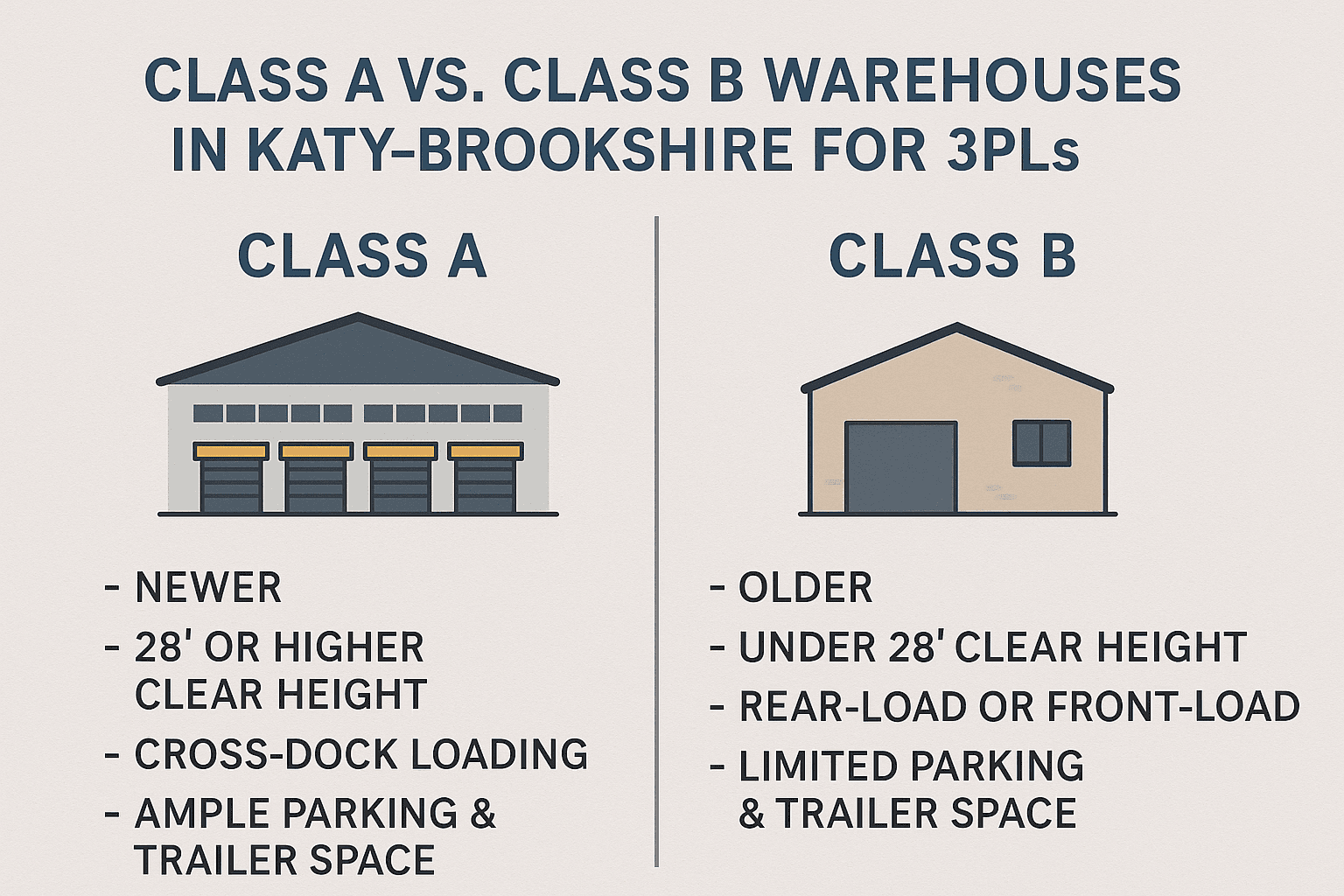
Class A vs Class B Warehouses in Katy-Brookshire: Which 3PL Property Type Delivers Better ROI?
Choosing between Class A and Class B warehouses in Katy-Brookshire? Learn which property type delivers the best ROI for 3PL operations along I-10.
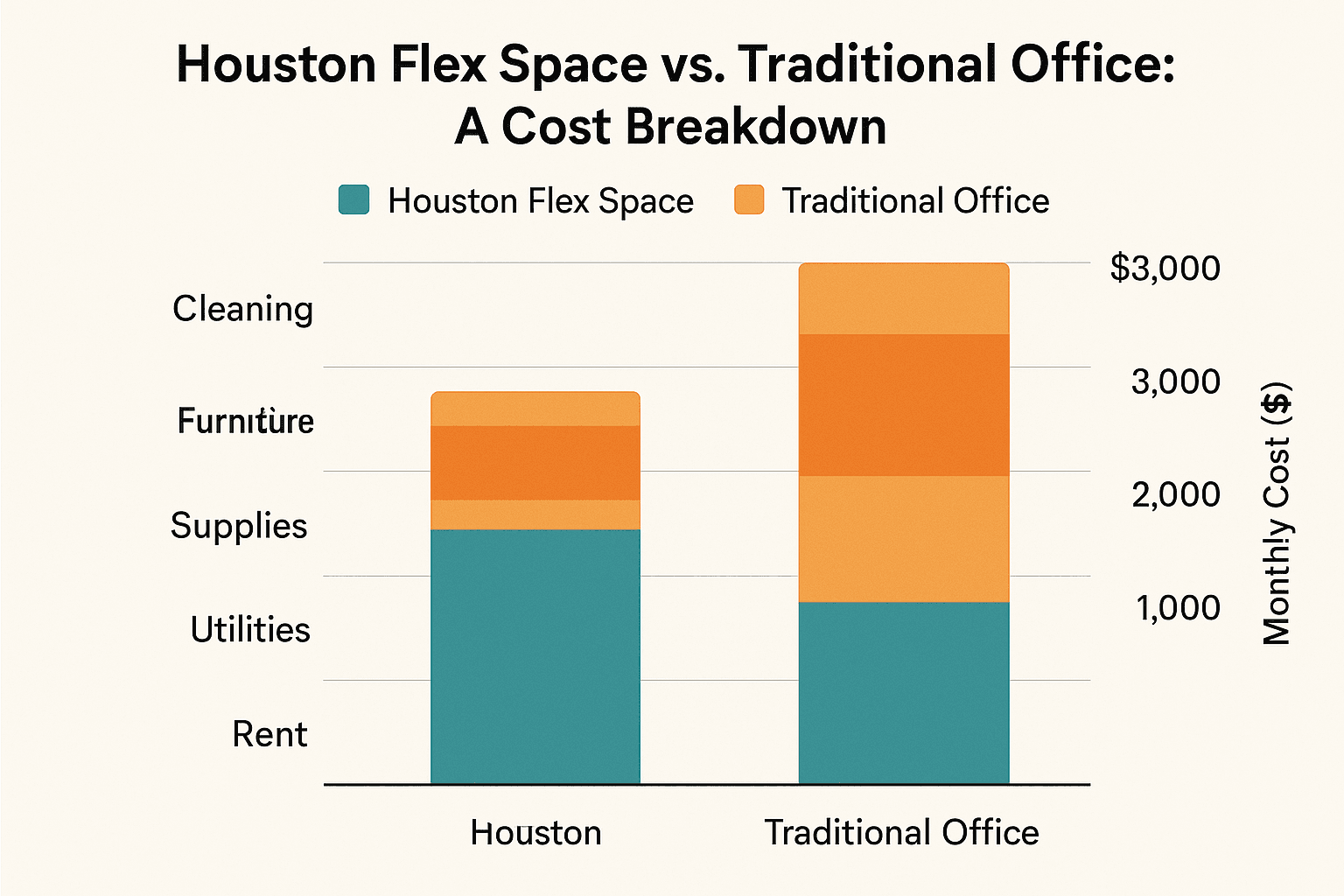
Houston Flex Space vs. Traditional Office: A Cost Breakdown for Small Businesses
Compare Houston flex space and traditional office costs for small businesses. Real pricing data, hidden fees, and market insights from a licensed CRE broker.
How we can help
Talk to a licensed broker about your specific transaction — Houston + New Jersey.