

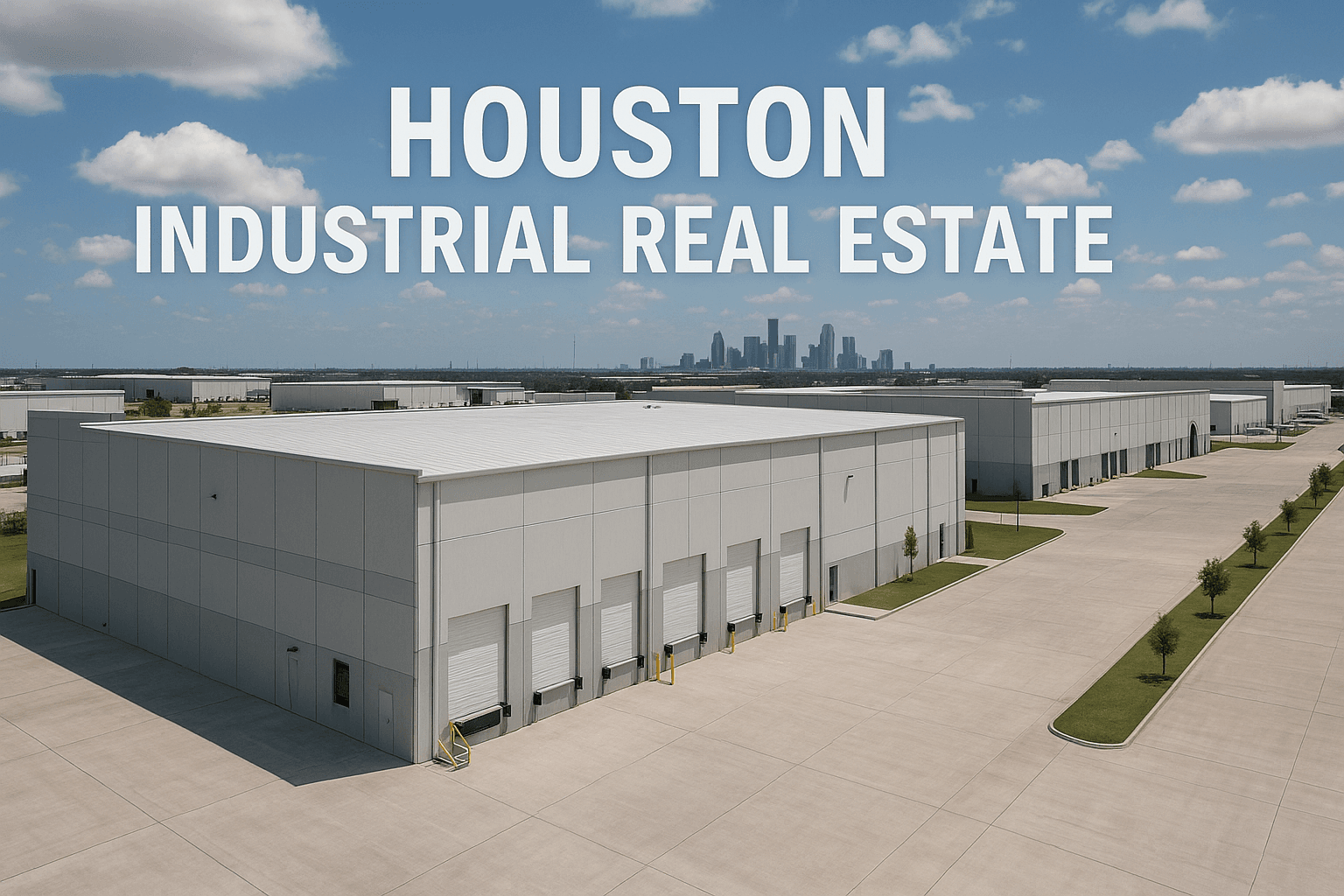
Houston Industrial Real Estate Market Update Q2 2026: Vacancy Rises to 7.3%
By Angelo Mitlo, Broker Associate | June 1, 2026
Vacancy in Houston's industrial market has climbed steadily over the past year as new supply outpaced demand for five consecutive quarters, reaching 7.3% in the second quarter of 2026—about 100 basis points above the 10-year average. An active construction pipeline could push vacancy up another 100 basis points by early 2027, reshaping the Houston industrial real estate market landscape for tenants and investors alike.
This Houston industrial market report examines the latest data on vacancy trends, leasing activity, construction volume, rent growth, and forward-looking conditions in one of the nation's most dynamic logistics real estate hubs. While near-term headwinds persist, Houston's long-term fundamentals remain anchored by robust population growth and expanding trade infrastructure.
Vacancy Trends and Supply Dynamics
The Houston warehouse market has absorbed significant new inventory over the past five years, with logistics properties 100,000 SF and larger expanding by more than 30% since 2021. This rapid expansion has driven the current vacancy rate to 7.3%, the highest level since early 2020. The southeast submarket near the Port of Houston exhibits especially elevated availability as new deliveries continue to outpace absorption.
According to CoStar data, roughly 30.7 million SF remains under construction across the metro, with 75% of that pipeline still available for lease. Much of this supply is concentrated in the big-box segment, where speculative development surged to a three-year high in 2025. Developers bet on continued demand from e-commerce fulfillment operators and third-party logistics providers, but absorption has lagged as tenants pause expansion amid economic uncertainty.
Leasing Activity and the Flight to Quality
Despite rising vacancy, leasing activity in the Houston industrial real estate market remains more than 60% above pre-pandemic norms. Demand is bifurcated: large-format users—particularly national retailers and manufacturers—continue to seek modern, high-efficiency space to support supply chain optimization and domestic reshoring initiatives. Smaller manufacturers and distributors, however, have adopted a more cautious stance, delaying expansion decisions as trade policy volatility and tariff risks weigh on forecasts.
A widening performance gap between older and newer facilities has become one of the market's defining trends. Tenant brokers report that the rent spread between aging assets and newly built bulk space has narrowed considerably, incentivizing many occupiers to upgrade. Consolidations and space reductions are accelerating a flight-to-quality, leaving older buildings more vulnerable to elevated vacancy and downward rental pressure.
Construction Pipeline and Development Activity
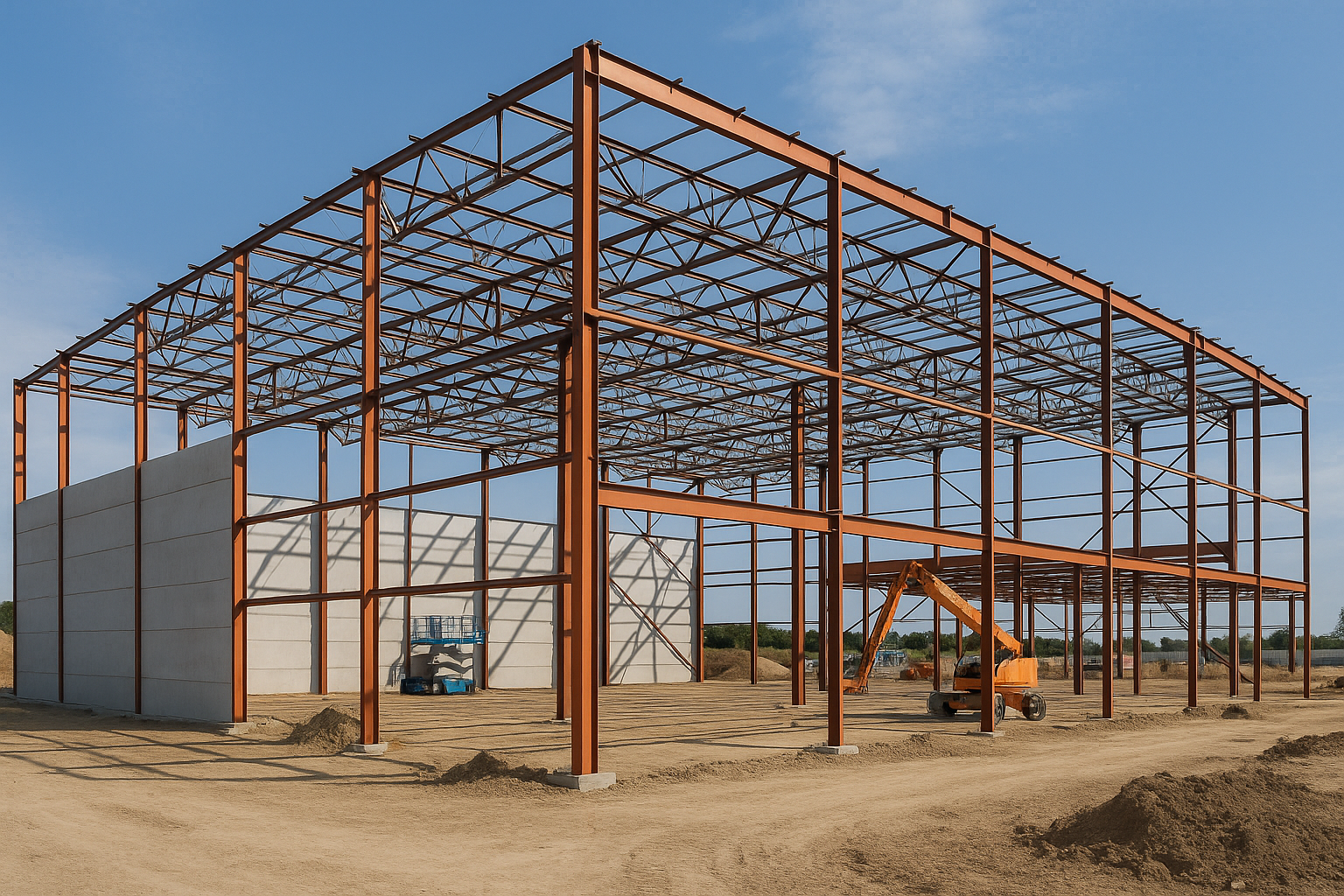
Houston's industrial development pipeline remains robust, though construction starts have moderated slightly from 2025 highs. The 30.7 million SF currently underway represents approximately 4.5% of total inventory, a level that historically signals a market nearing equilibrium but not yet oversupplied.
Key drivers of new construction include:
Proximity to the Port of Houston and major interstate corridors (I-10, I-45, Beltway 8)
Strong demand for modern cold storage and cross-dock facilities
Speculative development by institutional capital seeking exposure to Sun Belt logistics
Expansion by polymer and petrochemical exporters capitalizing on Houston's energy infrastructure
Deliveries are expected to peak in late 2026 and early 2027, with absorption gradually catching up as tenants who delayed decisions during the 2025 rate-hike cycle return to the market.
Rent Growth and Landlord Concessions
Amid rising supply and greater tenant choice, annual rent growth in the Houston warehouse market slipped to -0.5% as of Q2 2026—the first negative reading since Q4 2010. Quarterly growth was even weaker at -1.0%, reflecting intensifying competition among landlords for quality tenants.
Concessions have become more common across the market. Tenants seeking spaces larger than 100,000 SF are typically securing four to six months of free rent on five-year terms, compared with three months just a few years ago. Landlords are also increasing tenant improvement allowances, particularly for older buildings, as they work harder to keep legacy assets competitive against newer Class A product.
Small-bay properties—those under 50,000 SF—are expected to continue outperforming the broader market. Availability is tight in this segment, construction activity is minimal, and high-quality, move-in-ready space remains scarce. Owners of well-located small-bay assets near the Galleria, Energy Corridor, and Greenspoint submarkets retain pricing power, with limited downward pressure on asking rents.
Submarket Performance Snapshot
Performance varies significantly across Houston's industrial submarkets:
Southeast (Port of Houston): Highest vacancy at 9.2%; 12.5M SF under construction; rent growth -2.1% YoY
North (IAH Airport Corridor): Vacancy 6.8%; strong demand from e-commerce and parcel logistics; rent growth flat
West (Katy/Energy Corridor): Vacancy 5.9%; limited new supply; small-bay segment outperforming
East (Baytown/Pasadena): Vacancy 8.1%; heavy polymer/chemical manufacturing; trade policy sensitivity
For businesses exploring tenant representation services or landlord advisory in Houston, understanding submarket nuances is critical to identifying value and mitigating risk in a shifting market.
Long-Term Fundamentals and Near-Term Risks
Over the long term, Houston's industrial fundamentals remain solid. The metro added 490,000 residents over the past three years—one of the largest population gains nationwide—and continues to expand its role as both a regional and global distribution hub. Polymer exports provide a meaningful tailwind, supported by billions in petrochemical infrastructure investment along the Gulf Coast.
According to Bureau of Labor Statistics data, Houston's logistics and warehousing employment has grown 18% since 2020, outpacing the national average and underscoring the sector's structural strength.
In the near term, however, risks tilt to the downside. Additional supply is expected to place upward pressure on vacancy through mid-2027, while volatile import activity and potential trade disruptions may temper demand. Tariff-driven inflation and declining real household incomes could slow consumer spending and reduce inventory levels, extending the sector's recovery timeline.
Investors and occupiers should monitor:
Federal Reserve policy and financing conditions for CRE
Port of Houston container volume and import/export trends
Energy sector capital expenditures and downstream manufacturing activity
Consumer spending indicators and retail sales velocity
Outlook for Houston Industrial Real Estate in 2026-2027
The Houston logistics real estate market is entering a normalization phase after several years of exceptional growth. Vacancy is rising but remains below distressed levels, and rent declines are modest compared to prior downturns. Landlords with well-located, modern assets and strong tenant rosters are weathering the adjustment with limited distress.
For tenants, the current environment presents opportunity: improved negotiating leverage, expanded concession packages, and access to higher-quality space at stable or declining rents. For investors, patient capital with a long-term view may find attractive entry points as cap rates widen modestly and distressed sellers emerge in secondary locations.
BulldogBroker CRE continues to monitor Houston industrial market conditions closely, providing data-driven insights and representation services to clients navigating this evolving landscape. For a confidential consultation on leasing, acquisition, or disposition strategies in the Houston market, contact Angelo Mitlo directly.

Licensed commercial real estate broker serving New Jersey and Houston, TX. 25+ years of cross-industry experience across aerospace, oil & gas, technology, and manufacturing — applied to landlord representation, tenant rep, investment sales, and CRE consulting.
Continue reading
All market updates →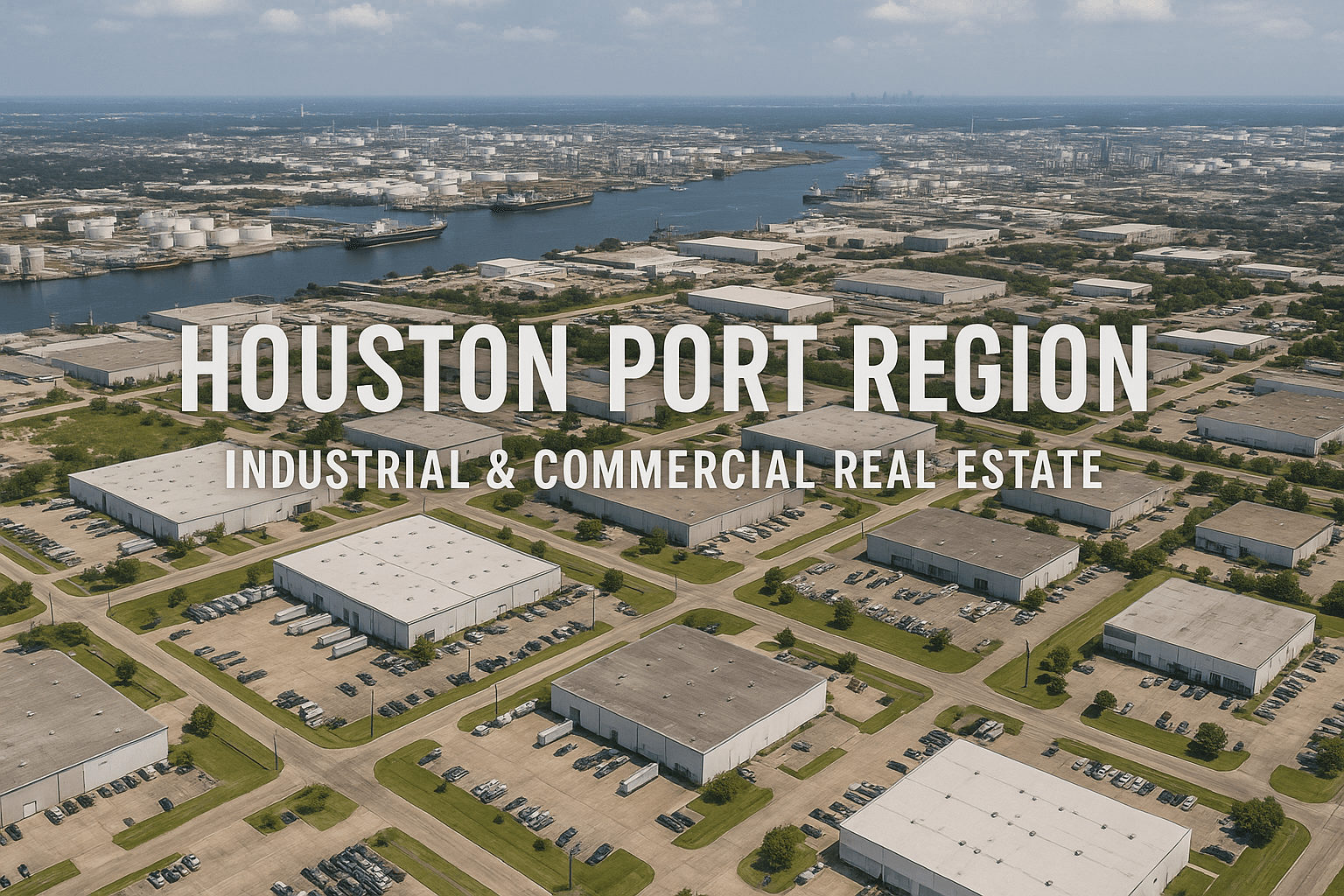
Houston Port Region Industrial Tenants: 2025 Market Update
Explore the booming growth of the Houston Port Region, a vital hub for commercial and industrial real estate driven by strategic investments, infrastructure enhancements, and a diverse tenant base. Discover how this dynamic area is reshaping the trade landscape, offering unparalleled opportunities for businesses and investors ready to capitalize on its vibrant economic environment and cutting-edge trends.
Newark Industrial Snapshot: Where Port-Adjacent Warehouse Vacancy & Cap Rates Sat in Q1 2024
Geo-specific deep dive capturing hyper-local search intent for Newark's port-driven industrial market
How we can help
Talk to a licensed broker about your specific transaction — Houston + New Jersey.