

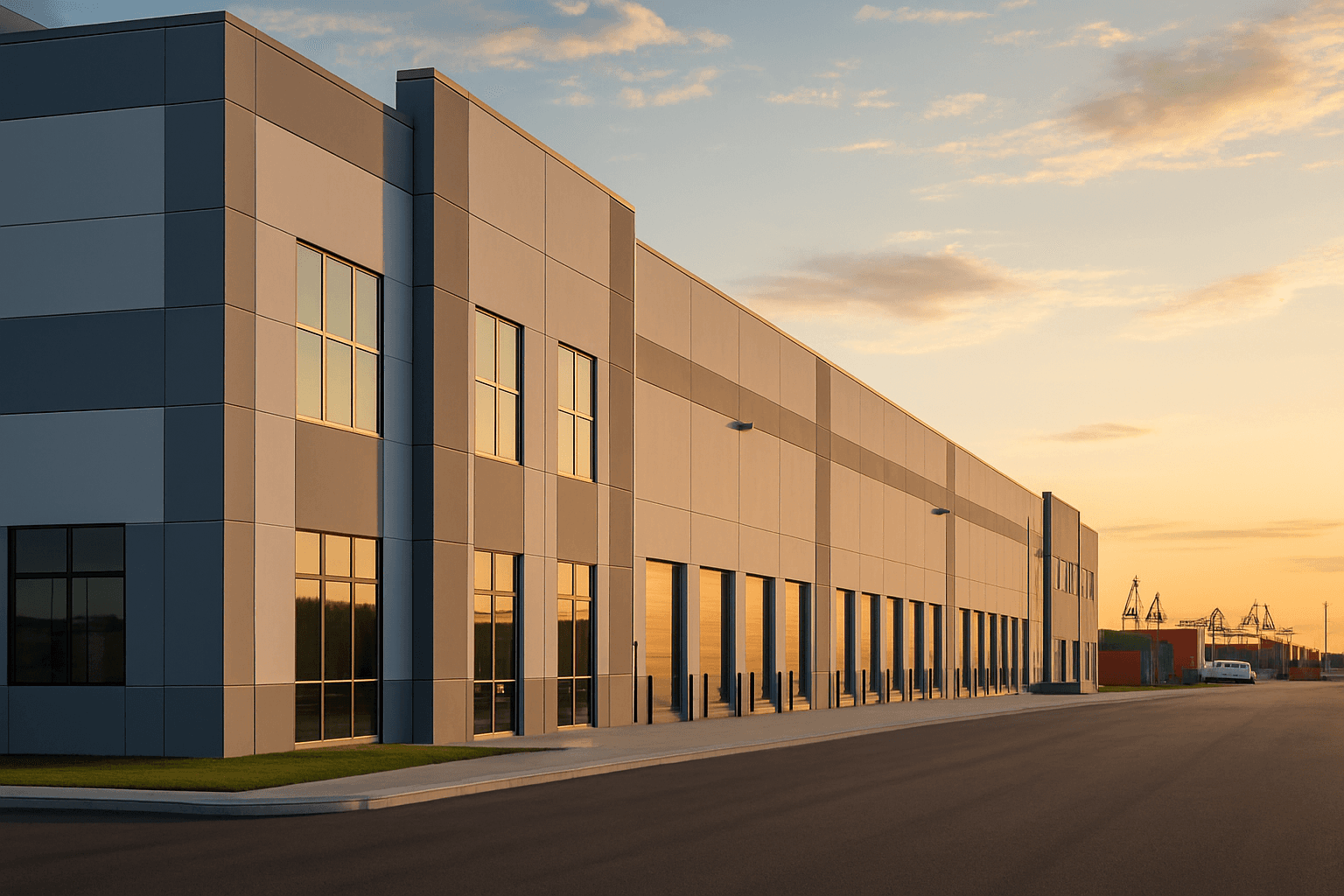
Newark Industrial Snapshot: Where Port-Adjacent Warehouse Vacancy & Cap Rates Sat in Q1 2024
By Angelo Mitlo, Licensed CRE Broker (NJ & TX)
Published March 15, 2024 | Updated April 2, 2024
Comprehensive market analysis of Newark's port-driven industrial sector, featuring Q1 2024 port-adjacent warehouse vacancy rates, Newark distribution center cap rates, and Port Newark industrial investment opportunities for commercial real estate investors.
Newark's Strategic Position in the New York Metro Industrial Market
The Newark industrial real estate market occupies a uniquely advantageous position within the broader New York metropolitan logistics network. Port-adjacent warehouse Newark properties command premium valuations that reflect their irreplaceable geographic positioning, serving as critical links between global supply chains and millions of consumers across the tri-state area.
Port Newark-Elizabeth Marine Terminal processes over 7 million twenty-foot equivalent units (TEUs) annually, making it the third-largest container port in North America by volume. This throughput creates sustained demand for proximate warehouse and distribution facilities capable of handling containerized cargo efficiently. The port's capacity for accommodating neo-Panamax vessels—with drafts up to 50 feet—further solidifies Newark's role as a critical East Coast logistics gateway.
What separates the Newark warehouse market from competing industrial submarkets in Central New Jersey or the Lehigh Valley is immediate port adjacency combined with direct interstate highway access. Properties within three miles of Port Newark benefit from reduced drayage costs (typically $150-$300 per container versus $400-$600 for facilities 15+ miles distant), shorter container turnaround times, and the ability to execute same-day transloading operations—operational advantages that translate directly into higher tenant retention rates and rental premiums of $2-$4 per square foot above non-port-adjacent facilities.
North Newark vs. South Newark Industrial Submarkets
The Newark industrial real estate landscape divides into distinct northern and southern submarkets, each with characteristic property types, tenant profiles, and investment metrics. North Newark, centered along the Route 21 and McCarter Highway corridors, features a mix of vintage multi-story warehouses built in the 1950s-70s and newer single-story distribution centers. This submarket serves urban last-mile delivery operations, with tenants including e-commerce fulfillment operators and food distribution companies requiring quick access to Manhattan and northern New Jersey population centers.
South Newark, particularly the area south of Interstate 78 toward Elizabeth, contains the highest concentration of port-adjacent warehouse Newark facilities. Modern Class A warehouses in this zone typically feature 32-36 foot clear heights, ESFR sprinkler systems, and dedicated truck courts designed for high-volume container handling. Investment-grade properties along Frelinghuysen Avenue and the South Street corridor trade at cap rates typically 50-75 basis points lower than comparable northern submarket assets due to superior port proximity.
Port Newark Container Terminal Impact on Warehouse Demand
Port Newark's operational dynamics create specific warehouse demand patterns that sophisticated Newark distribution center investment professionals monitor closely. The terminal's 2023 cargo volume demonstrated resilience despite broader economic headwinds, with import volumes remaining within 3-5% of peak 2021 levels according to Bureau of Transportation Statistics data.
Container dwell time—the period cargo remains at terminal before pickup—directly influences warehouse absorption rates in the Newark industrial market. When dwell times increase due to chassis shortages or labor constraints (as occurred during Q4 2022), demand spikes for nearby transload facilities and short-term storage warehouses. Conversely, efficient port operations that minimize dwell time favor large distribution centers capable of processing high container volumes with minimal intermediate staging.
The Port Authority of New York and New Jersey's ExpressRail system, which provides on-dock rail connectivity, has fundamentally altered warehouse location strategies for certain tenant categories. Facilities with direct rail sidings can receive containers via double-stack trains, eliminating drayage costs entirely for cargo destined to inland markets. Distribution centers in Newark's industrial corridor leverage rail connectivity to serve both local and regional markets from a single location, reducing overall supply chain costs by an estimated 12-18% for tenants with significant Midwest distribution requirements.
Import Composition and Tenant Mix Implications
Understanding Port Newark's import composition provides critical insight into which warehouse tenant categories drive lease activity. According to port authority data, furniture and home goods typically represent 18-22% of inbound container volume, followed by automotive parts (15-18%), consumer electronics (12-15%), and food/beverage products (10-12%). This cargo mix explains why Newark industrial real estate properties attract tenants ranging from national furniture retailers operating regional distribution hubs to cold storage operators serving the restaurant supply chain.
The port's role as the primary entry point for European imports into the U.S. Northeast creates additional tenant diversity. European automotive manufacturers, pharmaceutical companies, and specialty food importers maintain warehouse operations in Newark specifically to minimize transit time from vessel discharge to customer delivery. These tenants typically execute longer-term leases (7-10 years) and accept higher rental rates in exchange for port proximity, making them highly desirable from an investment stability perspective.
Newark Industrial Submarket Performance: Vacancy Rates Q1 2024
As of Q1 2024, the Newark industrial real estate market exhibits a bifurcated performance profile based on building class and functional obsolescence. Class A warehouses—defined as properties built after 2000 with clear heights exceeding 28 feet and modern loading configurations—maintain Port Newark industrial vacancy rates between 3.8% and 5.2%, reflecting sustained demand for logistics-optimized facilities despite broader economic uncertainty.
Older Class B/C industrial stock, particularly multi-story warehouses built before 1980, faces structural vacancy challenges averaging 12-16%. These properties suffer from inadequate truck court dimensions (often less than 120 feet of depth), limited column spacing incompatible with modern racking systems, and ceiling heights of 16-22 feet that cannot accommodate contemporary material handling equipment. However, certain Class B warehouses within one mile of Port Newark have found renewed demand from last-mile delivery operators and e-commerce fulfillment companies willing to accept lower ceiling heights in exchange for prime location and rents 30-40% below Class A market rates.
Average Asking Rents and Rental Rate Trends
Newark warehouse lease rates vary significantly by property specification and geographic micro-location. Class A distribution centers along the I-78 corridor typically command asking rents of $15.50 to $19.00 per square foot triple-net as of Q1 2024, reflecting cumulative growth of 32-38% from 2020 levels. These facilities typically feature dock-high loading (one door per 8,000-10,000 SF), LED lighting, ESFR sprinkler systems, and trailer parking ratios exceeding 1:1,000 SF—amenities that justify premium pricing in a supply-constrained market.
Port-adjacent warehouse Newark properties with direct gate access to terminal facilities or rail sidings achieve rental premiums of $2.50-$4.00 per square foot compared to facilities located three to five miles from the port. For a 200,000-square-foot warehouse, this port-adjacent premium translates to $500,000-$800,000 in additional annual revenue, capitalizing at market rates to $8-13 million in incremental property value.
Lease rate growth in the Newark industrial market has moderated from the 18-24% annual increases observed during 2021-2022, with Q1 2024 data suggesting year-over-year growth of 4-6%—a more sustainable pace that reflects new supply deliveries in adjacent submarkets like Kearny and Harrison, which provide tenant alternatives while maintaining reasonable port access via the New Jersey Turnpike.
Vacancy Rate Trends by Property Type
Small-bay industrial space (under 50,000 SF) in Newark demonstrates the tightest vacancy conditions at 2.1-3.5%, driven by sustained demand from local distributors, contractors, and service businesses requiring urban-proximate facilities. Large distribution centers (200,000+ SF) show higher vacancy rates of 5.8-7.2%, partially attributable to the delivery of approximately 1.8 million square feet of new construction in the broader Newark-Kearny-Elizabeth industrial market over the past 18 months.
Cold storage and temperature-controlled warehouses represent a specialty segment within the Newark distribution center investment market, maintaining near-zero vacancy (0.8-1.5%) despite construction costs 60-80% higher than ambient warehouse space. The concentration of food importers, pharmaceutical companies, and restaurant distributors creates consistent demand for refrigerated and frozen storage capacity that industry participants estimate exceeds available supply by 15-20% regionally.
Investment Opportunities in Newark Warehouses and Distribution Centers
Investing in Newark industrial real estate requires understanding the distinct risk-return profiles across property types, tenant credit quality, and lease structures. Institutional-grade distribution centers leased to investment-grade tenants on long-term triple-net leases typically trade at cap rates in the 5.25% to 6.00% range as of Q1 2024, reflecting their bond-like cash flow characteristics and limited landlord responsibilities.
Value-add opportunities in the Newark warehouse market typically involve Class B properties requiring capital improvements to attract modern tenants. A representative example: acquiring a 150,000-square-foot warehouse at a 7.5% cap rate, investing $15-20 per square foot in LED lighting, upgraded loading docks (expanding from 8 to 12 doors), and enhanced trailer parking, then re-leasing at market rates to achieve a stabilized 6.25% cap rate with 35-40% increase in net operating income and significantly enhanced exit value.
Newark Warehouse Cap Rates 2024: Investment Metrics
Newark warehouse cap rates 2024 have compressed significantly over the past three years, driven by institutional capital allocation to logistics real estate and the market's defensive characteristics during economic uncertainty. Class A port-adjacent warehouses have experienced 75-100 basis points of cap rate compression since early 2021, with prime assets trading at 5.00-5.50% compared to 5.75-6.50% three years prior.
This cap rate compression reflects multiple converging factors: Treasury yields declining from October 2023 peaks above 5.0% to Q1 2024 levels of 4.2-4.5%, sustained institutional demand for industrial assets (particularly from logistics-focused REITs and pension funds), limited new construction in fully built-out port-adjacent areas, and growing recognition of Newark's strategic irreplaceability within East Coast supply chains. Properties with creditworthy tenants (S&P rated BBB- or higher) on leases exceeding five years remaining term achieve the lowest cap rates, with exceptional assets occasionally trading at sub-5.0% cap rates.
Forward-looking cap rate projections for the Newark industrial real estate market suggest stabilization rather than further compression. As interest rates normalize and construction financing becomes more accessible, new supply in peripheral locations (Harrison, Kearny, South Kearny) may create modest cap rate expansion of 25-50 basis points for non-prime assets while the highest-quality port-adjacent facilities maintain current pricing levels due to scarcity value.
Newark Distribution Center Acquisition Strategies
Successful Newark distribution center investment strategies typically focus on one of three approaches: core stabilized assets for income-oriented investors, value-add repositioning plays for operators with construction expertise, or land assemblage for ground-up development in the limited remaining industrially-zoned areas.
Core acquisitions target fully-leased, well-maintained facilities with in-place rents at or near market levels. These properties offer immediate cash flow with minimal capital requirements but trade at compressed cap rates reflecting their lower risk profile. Stabilized properties with long-term national tenants (Amazon, FedEx, major furniture retailers) typically trade at 5.25-5.75% cap rates with annual rent escalations of 2.5-3.0%, providing predictable income streams highly valued by institutional investors and 1031 exchange buyers.
Value-add strategies in the Newark industrial market focus on functional improvements rather than wholesale redevelopment. Upgrading lighting systems to LED (reducing tenant operating costs by $0.30-$0.50 per square foot annually), improving trailer parking configurations to increase capacity by 15-25%, adding climate control to previously unheated spaces, or reconfiguring office areas to accommodate modern tenant requirements (collaborative workspaces, upgraded HVAC) can generate 200-300 basis point returns on invested capital when executed with experienced local contractors.
Infrastructure and Transportation: Highway Access and Rail Connectivity
Infrastructure quality fundamentally determines warehouse functionality and, consequently, investment value in the Newark industrial real estate market. The convergence of Interstate 78, Interstate 95 (New Jersey Turnpike), Route 1&9, and Route 21 creates unparalleled highway connectivity that enables efficient distribution to both urban and suburban destinations throughout the Northeast and Mid-Atlantic regions.
Properties with direct access to I-78 benefit from the highway's role as the primary east-west corridor connecting Port Newark to Pennsylvania and points west. Warehouses located on the I-78 corridor between the port and the Interstate 95 interchange achieve valuation premiums of 8-12% due to drivers' ability to access either northbound routes toward New England or westbound routes toward the Midwest without navigating congested local streets (which can add 20-35 minutes to trip times during peak hours).
I-78 Corridor Properties and Investment Advantages
The I-78 industrial corridor in Newark encompasses some of the market's most sought-after warehouse locations. Properties in this zone benefit from direct highway access while maintaining proximity to Port Newark—typically within 2-4 miles or 8-12 minutes of drive time. Tenant categories favoring I-78 locations include regional distributors serving multi-state territories (Pennsylvania, New York, Connecticut, Massachusetts), importers requiring both port access and inland distribution capability, and e-commerce fulfillment operators balancing urban last-mile delivery with regional parcel shipments.
Recent transactions along the I-78 corridor demonstrate sustained investor appetite despite broader economic uncertainty. Distribution centers near the Frelinghuysen Avenue interchange have traded at competitive pricing in recent quarters, with some transactions in the $180-$220 per square foot range representing estimated 5.5-6.0% cap rates. The appeal of these properties stems from dual-access design allowing trucks to enter from either frontage roads or direct highway ramps, eliminating local traffic conflicts that plague many urban industrial facilities and reducing average dwell time by 15-20%.
Rail Connectivity and Intermodal Advantages
Rail connectivity remains underutilized in the Newark industrial real estate market despite its potential to reduce logistics costs by 15-25% for appropriate cargo types. Fewer than 30 warehouses in Newark maintain active rail sidings, primarily serving automotive parts distributors, building materials suppliers, and bulk commodity handlers. The NJ Transit rail network connects to Class I railroads (CSX, Norfolk Southern), enabling direct shipments from Midwest manufacturing centers without intermediate handling.
For certain tenant categories, rail access justifies rental premiums of $1.50-$2.50 per square foot or custom build-to-suit construction. A furniture importer receiving 200+ containers monthly via Port Newark can transfer cargo to railcars for distribution to Chicago-area warehouses, avoiding over-the-road trucking costs of $3,000-$4,500 per load while maintaining a single East Coast distribution point. Properties offering both truck and rail loading capability provide operational redundancy that enhances tenant retention during periods of trucking capacity constraints or driver shortages (as experienced during 2021-2022).
Partnering with BulldogBroker CRE for Newark Industrial Real Estate
Navigating the Newark industrial real estate market requires local expertise, institutional relationships, and detailed knowledge of property-specific operational characteristics that determine investment outcomes. Angelo Mitlo and the BulldogBroker CRE team bring over two decades of combined experience in New Jersey industrial transactions, with particular depth in port-adjacent warehouse acquisitions, value-add repositioning strategies, and sale-leaseback transactions for owner-users.
Our buyer representation services provide investors with comprehensive market intelligence, off-market deal flow, and transaction execution support throughout the acquisition process—from initial underwriting and due diligence through closing and tenant transition management. We maintain active relationships with institutional owners, regional developers, and family office investors who control significant Newark warehouse inventory, often gaining early access to properties before formal marketing begins (estimated 30-40% of our buyer transactions involve off-market or pre-market opportunities).
For sellers, our seller representation approach emphasizes strategic positioning to attract qualified buyers and maximize asset value. This includes pre-marketing property improvements (lighting upgrades, parking optimization, cosmetic enhancements), competitive positioning analysis against comparable listings, and targeted outreach to buyer categories most likely to recognize value in specific property characteristics—whether port proximity, highway access, specialized tenant improvements, or development potential for vertical expansion or intensification.
Newark Market Intelligence and Transaction Support
BulldogBroker CRE maintains proprietary databases tracking Newark industrial real estate lease comparables, recent sales transactions, and active tenant requirements that inform our advisory recommendations. We analyze submarket absorption trends (currently averaging 200,000-300,000 SF quarterly for Class A space), monitor new construction deliveries, and track rental rate movements across property types to provide clients with actionable intelligence for acquisition underwriting and disposition timing decisions.
Our New Jersey market expertise extends beyond Newark to encompass adjacent industrial markets in Kearny, Harrison, Jersey City, Elizabeth, and Bayonne. This regional perspective enables comparative analysis that identifies mispriced opportunities or emerging submarkets offering superior risk-adjusted returns—such as Harrison's transformation from manufacturing hub to modern logistics center, or South Kearny's emergence as a viable port-adjacent alternative with 20-25% lower basis than core Newark locations.
Whether you're acquiring your first Newark warehouse, expanding an existing industrial portfolio, or evaluating port-adjacent warehouse Newark properties for institutional deployment, we provide the local knowledge and transaction experience to execute successfully in this competitive, supply-constrained market.
Conclusion: Newark Industrial Real Estate Investment Outlook
The Newark industrial real estate market presents compelling investment opportunities for those who understand its unique operational dynamics, infrastructure advantages, and tenant demand drivers. Port proximity, highway connectivity, and sustained e-commerce growth create a defensive investment profile with inflation-hedged cash flows and long-term appreciation potential. While Port Newark industrial vacancy rates remain historically low and cap rate compression has moderated some return expectations, the fundamental supply-demand imbalance—particularly for Class A port-adjacent facilities—supports continued rental growth and value appreciation over the next 3-5 years.
Contact Angelo Mitlo at BulldogBroker CRE for exclusive Newark port-adjacent warehouse listings, off-market investment opportunities, and expert advisory services. Licensed in New Jersey and Texas, our team provides institutional-quality market intelligence and transaction execution for private investors, family offices, and institutional capital seeking Newark distribution center investment opportunities. Reach out today to discuss your industrial real estate objectives and learn how our specialized expertise can enhance your acquisition outcomes.

Licensed commercial real estate broker serving New Jersey and Houston, TX. 25+ years of cross-industry experience across aerospace, oil & gas, technology, and manufacturing — applied to landlord representation, tenant rep, investment sales, and CRE consulting.
Continue reading
All market updates →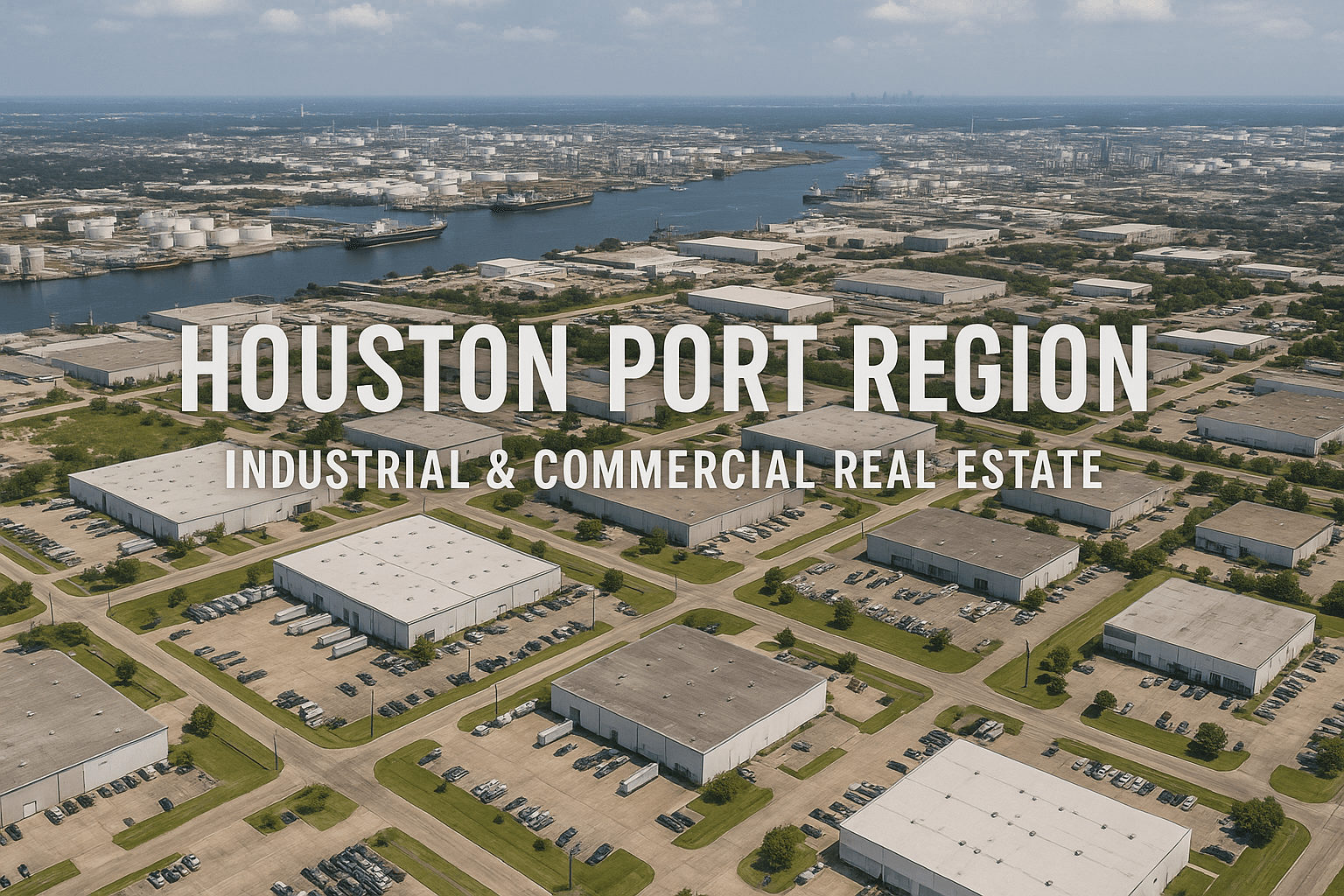
Houston Port Region Industrial Tenants: 2025 Market Update
Explore the booming growth of the Houston Port Region, a vital hub for commercial and industrial real estate driven by strategic investments, infrastructure enhancements, and a diverse tenant base. Discover how this dynamic area is reshaping the trade landscape, offering unparalleled opportunities for businesses and investors ready to capitalize on its vibrant economic environment and cutting-edge trends.
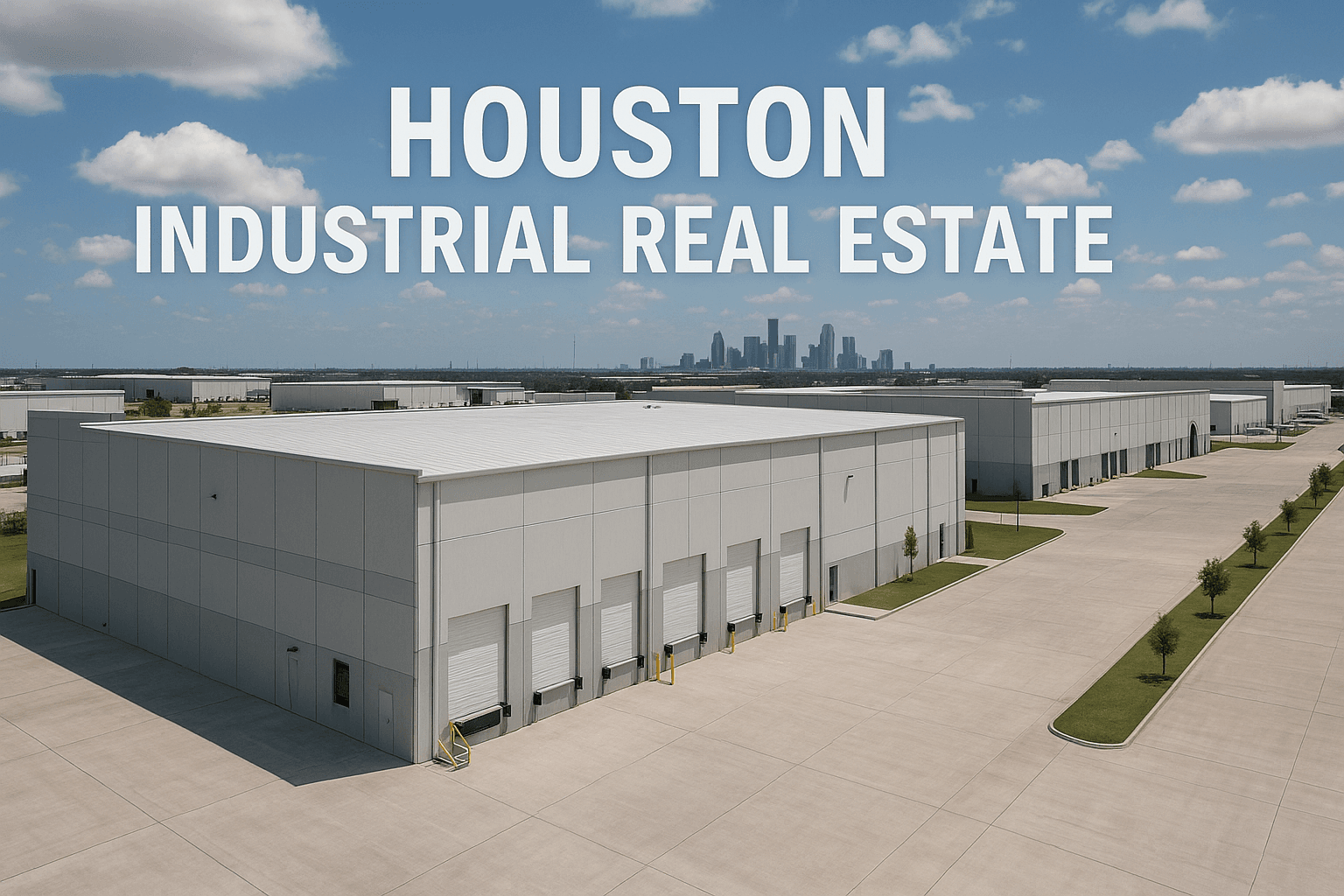
Houston Industrial Real Estate Market Update Q2 2026: Vacancy Rises to 7.3%
Houston's industrial market is still solid and performing but has hit a vacancy rate it hasn't seen since 2010. What you should know and areas to look for when investing.
How we can help
Talk to a licensed broker about your specific transaction — Houston + New Jersey.