

Where Amazon, FedEx & UPS Lease Industrial Space
Houston's e-commerce explosion has transformed the city's industrial real estate landscape, with last-mile delivery hubs now occupying prime locations across every major submarket. From Amazon's massive sortation centers in Katy and Pearland to FedEx Ground's network of neighborhood facilities, the nation's largest logistics providers have planted their flags throughout the Greater Houston area—and they're still expanding.
As a commercial real estate broker working daily with Houston's industrial market, I track every major carrier lease and facility opening. The competition for strategically located last-mile space has never been fiercer, with properties near Highway 290, I-45, and Beltway 8 commanding premium rates. Understanding where these hubs cluster—and why—reveals critical insights about Houston's logistics infrastructure and future industrial development patterns.
This guide maps the current last-mile delivery landscape in Houston, detailing specific locations where Amazon, FedEx, UPS, and other carriers have established operations, along with the property characteristics and lease economics driving their site selections. Whether you're a property owner evaluating your site's potential for landlord representation or an operator seeking tenant representation for expansion, this analysis provides actionable market intelligence.
What Defines a Last-Mile Delivery Hub in Houston's Industrial Market
Last-mile delivery hubs represent the final link in the e-commerce supply chain—facilities positioned within 10-30 miles of end consumers where packages are sorted, loaded onto delivery vehicles, and dispatched for same-day or next-day delivery. Unlike traditional distribution centers that focus on regional inventory storage, last-mile facilities prioritize speed, vehicle staging capacity, and proximity to dense population centers.
In Houston's industrial market, these facilities typically share several defining characteristics:
Size range: 50,000 to 350,000 square feet, with Amazon's sortation centers trending larger (200,000-350,000 SF) and FedEx/UPS neighborhood hubs smaller (50,000-150,000 SF)
Clear height: 28-32 feet minimum for vertical sortation equipment and mezzanine operations
Dock doors: Limited dock requirements (often 10-20 doors) compared to traditional warehouses, since most volume exits through van doors
Van staging areas: Extensive surface parking for 100-300+ delivery vans with easy ingress/egress
Geographic distribution: Strategically dispersed across submarkets to create overlapping 15-mile delivery radiuses covering the entire metro
Highway proximity: Direct access to major arterials (I-10, I-45, US-290, Beltway 8) for rapid deployment to delivery zones
The shift toward last-mile infrastructure has fundamentally altered Houston's industrial absorption patterns. According to industry research, last-mile facilities now represent approximately 15-20% of Houston's annual industrial leasing activity, up from less than 5% a decade ago.
These facilities command lease rates 10-25% above traditional warehouse space due to their strategic positioning and specialized build-outs. Property owners in submarkets with strong last-mile fundamentals—population density above 2,000 per square mile, median household incomes exceeding $60,000, and limited competing facilities within a 5-mile radius—are seeing particularly aggressive tenant interest.
Amazon's Houston Last-Mile Network: Current Locations and Expansion
Amazon operates the most extensive last-mile delivery hub network in the Houston market, with facilities strategically positioned to blanket the metropolitan area. The company's Houston footprint includes both large sortation centers (where packages arrive from fulfillment centers and are sorted by delivery route) and smaller delivery stations (final staging points for van deployment).
Amazon Sortation Centers in Houston
Katy Sortation Center (HTX5)
Location: 22002 Highland Knolls Drive, Katy, TX 77449 (near I-10 and Grand Parkway)
Size: Approximately 280,000 square feet
Opened: 2019
This facility serves as Amazon's primary sortation hub for western Houston suburbs, processing packages destined for Katy, Cypress, Fulshear, and western Harris County. The site's position at the I-10/Grand Parkway interchange provides direct access to one of Houston's fastest-growing residential corridors.
Pearland Sortation Center (HTX6)
Location: 2707 Smith Ranch Road, Pearland, TX 77584 (near TX-288 and Beltway 8)
Size: Approximately 320,000 square feet
Opened: 2020
Strategically positioned to serve Pearland, Friendswood, League City, and Clear Lake, this facility leverages TX-288's direct connection to both downtown Houston and Galveston County's growing residential markets.
North Houston Sortation Center (HTX7)
Location: 1601 Holzwarth Road, Spring, TX 77388 (near I-45 and Hardy Toll Road)
Size: Approximately 265,000 square feet
Opened: 2021
This location anchors Amazon's coverage of The Woodlands, Spring, Tomball, and northern Harris/Montgomery County communities—some of Houston's highest-income delivery zones.
Amazon Delivery Stations in Houston
Amazon operates multiple smaller delivery stations throughout Greater Houston, typically ranging from 125,000 to 180,000 square feet. Key locations include:
East Houston (DH04): 14435 Sommermeyer Street, Houston, TX 77041 (near Highway 290 and Hollister)
Southwest Houston (DH09): 12450 South Main Street, Houston, TX 77035 (near Beltway 8 and Main Street)
Northwest Houston (DH12): 13503 Jones Road, Houston, TX 77070 (near US-290 and Jones Road)
Southeast Houston (DH15): 9350 Genard Road, Houston, TX 77075 (near I-45 South and Scarsdale)
West Houston (DH18): 16810 Clay Road, Houston, TX 77084 (near Highway 6 and Clay Road)
Amazon's Houston site selection strategy prioritizes population density and income demographics over raw distance from city center. The company clusters multiple smaller delivery stations rather than relying solely on large sortation centers, enabling two-hour and same-day delivery windows across nearly all of Harris, Fort Bend, and Montgomery counties.
Lease rates for Amazon's Houston facilities typically range from $6.50 to $8.50 per square foot NNN, with the company often signing 10-year initial terms and negotiating substantial tenant improvement allowances for specialized sortation equipment installation. Amazon's creditworthiness makes these facilities highly attractive to institutional investors, and several Houston last-mile properties have traded at cap rates below 5% when anchored by Amazon leases.
FedEx Ground and Express Facilities Across Greater Houston
FedEx operates a dual-network strategy in Houston, maintaining separate facilities for FedEx Ground (e-commerce and ground parcel) and FedEx Express (overnight and time-definite delivery). This bifurcated approach results in more total facilities but smaller individual footprints compared to Amazon's model.
FedEx Ground Facilities
Northwest Houston Ground Hub
Location: 14640 FM 529, Houston, TX 77041 (near Highway 290 and Fairfield Place Drive)
Size: Approximately 140,000 square feet
This facility serves as FedEx Ground's primary hub for northwest Houston, Cypress, and portions of Katy, with staging capacity for approximately 150 delivery vehicles.
East Houston Ground Terminal
Location: 6902 Wallisville Road, Houston, TX 77020 (near I-10 East and Wayside Drive)
Size: Approximately 95,000 square feet
Positioned to cover the East Houston industrial corridor, Channelview, Baytown, and portions of Pasadena, this location leverages its proximity to I-10's direct connection to Beaumont and Louisiana markets.
Southwest Houston Ground Facility
Location: 8855 Westpark Drive, Houston, TX 77063 (near Beltway 8 and Westpark)
Size: Approximately 110,000 square feet
This strategically located facility serves Missouri City, Sugar Land, Stafford, and inner-loop southwest Houston neighborhoods, benefiting from Westpark Drive's connection to both US-59 and Beltway 8.
North Houston Ground Hub
Location: 200 Rankin Road, Houston, TX 77073 (near I-45 and Rankin Road)
Size: Approximately 125,000 square feet
Covering The Woodlands, Spring, and Humble, this facility complements FedEx's presence in Houston's northern growth corridor.
FedEx Express Stations
FedEx Express maintains smaller, more numerous facilities focused on overnight delivery:
Greenspoint Station: 333 Greens Road, Houston, TX 77067 (near I-45 and Greens Road) – approximately 75,000 square feet
Westchase Station: 3730 Bingle Road, Houston, TX 77092 (near I-10 and Bingle) – approximately 65,000 square feet
Clear Lake Station: 16635 El Camino Real, Houston, TX 77058 (near I-45 and NASA Parkway) – approximately 55,000 square feet
Energy Corridor Station: 14350 Torrey Chase Boulevard, Houston, TX 77014 (near I-10 and Eldridge) – approximately 60,000 square feet
FedEx Ground facilities typically lease at $5.75 to $7.50 per square foot NNN in Houston, slightly below Amazon rates but above traditional warehouse benchmarks. The company's smaller-footprint strategy allows greater flexibility in site selection, and FedEx often occupies secondary buildings in mixed-use business parks rather than purpose-built last-mile facilities.
One notable trend in FedEx's Houston expansion: the company increasingly seeks buildings with immediate highway visibility for brand exposure, willing to pay 8-12% premiums for high-profile locations along major commuter corridors. This contrasts with Amazon's strategy of prioritizing functional efficiency over visibility.
UPS Hub Locations and Recent Lease Activity in Houston
UPS operates fewer but larger facilities in Houston compared to Amazon and FedEx, reflecting the company's integrated hub-and-spoke model where facilities handle both ground and air shipments. UPS's Houston network centers on several major hubs with extensive sorting capacity and employee headcount.
Major UPS Facilities in Houston
North Belt Hub
Location: 15710 John F Kennedy Boulevard, Houston, TX 77032 (near I-45 and Airtex Drive)
Size: Approximately 225,000 square feet
Opened/Expanded: Original facility expanded in 2018
This facility serves as UPS's primary sorting hub for northern Houston, with direct connections to Bush Intercontinental Airport and coverage extending to The Woodlands, Conroe, Humble, and Kingwood. The site employs approximately 400-500 workers during peak season.
Southwest Houston Hub
Location: 12100 Bissonnet Street, Houston, TX 77099 (near US-59 and Bissonnet)
Size: Approximately 180,000 square feet
Strategically positioned to serve Sugar Land, Missouri City, Stafford, and Fort Bend County, this facility benefits from US-59's direct connection to both downtown Houston and Victoria/Corpus Christi markets to the south.
East Houston Distribution Center
Location: 9350 Clinton Drive, Houston, TX 77029 (near I-10 East and Clinton Drive)
Size: Approximately 165,000 square feet
This facility covers the Houston Ship Channel industrial corridor, Baytown, Pasadena, Deer Park, and portions of Galena Park, with specialized handling for the region's petrochemical industry shipments.
Westchase Hub
Location: 2727 Hayes Road, Houston, TX 77082 (near I-10 and Eldridge)
Size: Approximately 145,000 square feet
Serving the Energy Corridor, Katy, and western Houston suburbs, this location provides coverage for some of Houston's highest commercial-density areas.
Recent UPS Expansion Activity
In 2022-2023, UPS executed several significant leases in emerging Houston submarkets:
Cypress Expansion: 120,000-square-foot lease at 19303 Northwest Freeway (US-290 and Huffmeister), opened Q4 2022, targeting Cypress's explosive residential growth
Pearland Facility: 95,000-square-foot lease near TX-288 and County Road 58, opened Q1 2023, complementing coverage of Pearland, Manvel, and Alvin
Tomball Addition: 85,000-square-foot facility at 24422 Kuykendahl Road (near FM 2920 and Kuykendahl), opened Q3 2023, addressing northwest Harris County's last-mile gap
UPS lease rates in Houston typically range from $6.25 to $7.75 per square foot NNN, with the company favoring longer lease terms (12-15 years) compared to Amazon and FedEx (10-12 years). UPS also tends to invest more heavily in building improvements and specialized sorting equipment, often negotiating $25-$40 per square foot in tenant improvement allowances.
The company's site selection criteria emphasize employee accessibility via public transportation and proximity to residential areas with hourly workforce availability—factors that increasingly influence industrial real estate valuations in Houston's tight labor market.
Emerging Last-Mile Submarkets: Where New Hubs Are Opening
As Houston's population disperses into outer-ring suburbs and exurban communities, last-mile delivery providers are extending their networks beyond traditional industrial submarkets. Several emerging areas are experiencing concentrated last-mile development activity, reshaping industrial demand patterns across the metro.
Grand Parkway Corridor (Segments E, F, G)
The Grand Parkway's completion around Houston's western arc has unlocked massive last-mile potential in previously underdeveloped submarkets. The Katy/Fulshear area along I-10, Cy-Fair along US-290, and The Woodlands area along I-45 are all seeing new delivery hub development.
Key factors driving this growth:
Population density in Grand Parkway census tracts increased 34% from 2015-2023, among Houston's fastest growth rates
Land costs 40-50% below inner-loop industrial land, enabling larger staging areas and expansion capacity
Direct highway connections to both city center and outer suburbs create efficient hub-spoke routing
Abundant workforce availability from nearby master-planned communities
Recent lease activity includes multiple 100,000-150,000 SF requirements from regional carriers, with asking rates climbing from $4.50/SF in 2020 to $6.25-$6.75/SF in 2024.
North Houston/IAH Airport Area
The area north of Bush Intercontinental Airport, particularly along the Hardy Toll Road and I-45 North corridors, has emerged as Houston's densest last-mile cluster outside the inner loop. Proximity to both airport cargo operations and northern residential markets creates unique dual-functionality potential.
The submarket now hosts facilities from Amazon, UPS, FedEx, DHL, OnTrac, and multiple regional carriers—over 1.2 million square feet of last-mile space delivered since 2019. Developers are speculatively building last-mile facilities in 80,000-120,000 SF configurations, a rarity in Houston's traditionally build-to-suit industrial market.
Lease rates in prime IAH-adjacent sites now exceed $7.50/SF NNN, approaching inner-loop pricing despite the suburban location. The submarket's advantages—24/7 airport access, proximity to The Woodlands' affluent consumer base, and connections to I-45's direct route to Dallas—continue driving tenant demand.
Southeast Houston/Clear Lake
The Clear Lake and League City area represents Houston's third major emerging last-mile hub, anchored by the region's concentration of high-income households and limited existing delivery infrastructure. NASA Road 1, Bay Area Boulevard, and the I-45 South corridor are all experiencing increased last-mile leasing activity.
Amazon's 2023 opening of a 135,000-square-foot delivery station in League City catalyzed additional carrier interest in the submarket. FedEx Ground and regional carriers have since added capacity, and landlords with vacant industrial space near I-45/Bay Area Boulevard are seeing unsolicited inquiries for last-mile conversions.
The submarket benefits from limited competition (historically underserved by last-mile infrastructure), strong demographics (median household incomes above $85,000), and geographic barriers (Galveston Bay, NASA facilities) that create natural delivery monopoly territories for established operators.
Fort Bend County Corridors
Sugar Land, Missouri City, and the US-59 South corridor through Fort Bend County represent Houston's fastest-growing last-mile expansion zone by facility count. The area's combination of rapid residential development, minimal industrial supply, and superior highway connectivity has attracted multiple carriers simultaneously.
Since 2021, the submarket has absorbed over 800,000 square feet of last-mile delivery space, with lease rates rising from $5.25/SF to $6.75-$7.25/SF for prime locations near US-59 interchanges. Available land near the Grand Parkway/US-59 intersection is commanding $8-$12 per square foot—triple the pricing of traditional Fort Bend industrial sites—due to last-mile tenant competition.
Landlords and sellers with industrial properties in these emerging submarkets are experiencing unprecedented tenant interest, with multiple carriers often competing for the same site during lease negotiations.
Typical Lease Terms and Property Requirements for Delivery Hubs
Last-mile delivery facilities command unique lease economics and property specifications compared to traditional industrial space. Understanding these requirements is critical for landlords evaluating repositioning opportunities and tenants planning expansions.
Lease Rate Benchmarks
Houston last-mile delivery hub lease rates vary significantly by submarket, facility size, and property condition:
Inner Loop (inside Beltway 8): $7.50-$9.50/SF NNN for Class A last-mile facilities; premium locations near I-10, I-45, or US-59 interchanges command the high end
Beltway 8 Corridor: $6.50-$8.00/SF NNN, with western segments (Energy Corridor, Westchase) trending higher than eastern segments
Grand Parkway/Outer Ring: $5.75-$7.25/SF NNN, rapidly appreciating as carriers expand outward
Emerging Submarkets: $5.00-$6.75/SF NNN, though submarkets with limited competition (Clear Lake, Pearland) approach mid-tier Beltway 8 pricing
These rates represent 15-30% premiums over traditional warehouse/distribution space in equivalent submarkets, reflecting last-mile tenants' willingness to pay for strategic positioning and specialized features.
Critical Property Features
Successful last-mile facilities share several physical characteristics that landlords should prioritize when evaluating conversion or development opportunities:
Clear Height: Minimum 28 feet clear, with 30-32 feet preferred for sortation centers. Facilities below 26 feet clear struggle to accommodate modern vertical sorting equipment and rarely attract national carrier tenants.
Column Spacing: 50' x 50' or greater column bays enable efficient sortation line layouts and open staging areas. Older industrial buildings with 40' x 40' spacing often require structural modifications.
Dock Configuration: Last-mile facilities require fewer dock doors than traditional distribution centers (1 door per 10,000-15,000 SF versus 1 per 5,000-8,000 SF) but need substantially more van doors—typically 1 van door per 1,000-1,500 SF.
Trailer Storage: 50-150 trailer parking spaces for Amazon sortation centers, 20-50 spaces for smaller delivery stations and FedEx/UPS facilities. Paved and striped, with overnight security lighting.
Van Staging: This is the single most critical feature for last-mile tenants. Facilities need 100-300+ striped van parking spaces with defined ingress/egress circulation, morning staging areas for driver meetings, and adequate turnaround space for simultaneous van deployments. Sites without 3-5 acres of contiguous paved staging area struggle to attract last-mile tenants regardless of building quality.
Power Infrastructure: 2,000-3,000 amps minimum for sortation centers with automated equipment; 1,000-1,500 amps for delivery stations. Battery charging stations for electric delivery vehicle fleets are increasingly required.
Office Buildout: 5-10% office space ratio (lower than traditional distribution centers' 10-15%) since last-mile facilities prioritize operational space over administrative functions. However, driver break rooms, restrooms, and orientation spaces are essential.
Lease Structure and Terms
National carriers typically structure Houston last-mile leases with several consistent elements:
Initial Term: 10 years for Amazon delivery stations, 12-15 years for UPS and FedEx facilities, with 5-10 year sortation center leases increasingly common as Amazon seeks flexibility
Renewal Options: Two 5-year options standard, with rental rate increases tied to CPI (Consumer Price Index) or fixed 2-3% annual escalations
TI Allowances: $15-$25/SF for delivery stations converting existing warehouse space; $30-$50/SF for sortation centers requiring specialized equipment infrastructure and mezzanine installations
Rent Abatement: 3-6 months during construction and equipment installation, with carriers often requesting additional free rent if landlord TI work extends beyond agreed timelines
Exclusivity Clauses: Some carriers request exclusivity preventing landlords from leasing to competing last-mile operators within the same building or adjacent properties—a significant consideration for multi-tenant industrial parks
Early Termination Rights: Amazon increasingly negotiates termination options at years 5 and 7, reflecting the company's preference for operational flexibility as delivery networks evolve
For property owners considering leasing to last-mile tenants, the combination of premium rates, strong tenant credit, and long-term commitments makes these deals highly attractive—but the specialized property requirements and tenant improvement costs require careful financial analysis to ensure positive returns.
How Last-Mile Demand Is Reshaping Houston's Industrial Real Estate
The explosive growth in last-mile delivery infrastructure is fundamentally altering Houston's industrial real estate market dynamics, affecting property valuations, development patterns, and investment strategies across the metro.
Absorption and Leasing Velocity
Last-mile tenants represented approximately 18-22% of Houston's industrial leasing activity in 2022-2023, up from 8-10% in 2018-2019. This concentration has accelerated absorption rates in submarkets with strong last-mile fundamentals, creating supply constraints and bidding wars for suitable properties.
In Q4 2023, Houston's overall industrial vacancy rate stood at approximately 6.2%, but submarkets within the Beltway 8 corridor with last-mile characteristics (adequate clear height, extensive yard space, highway access) showed effective vacancy below 3.5%. Properties meeting last-mile specifications are leasing 40-60% faster than general-purpose warehouse space.
This demand surge has created a new property classification within Houston's industrial market—brokers and landlords now routinely designate listings as "last-mile suitable" or "last-mile capable," commanding 12-20% asking rate premiums over comparable properties lacking those characteristics.
Development Trends and Speculative Construction
Houston's historically conservative industrial development market—where 85-90% of new construction was traditionally build-to-suit or pre-leased—has seen a fundamental shift. Developers are now delivering speculative last-mile facilities in 80,000-150,000 SF configurations, betting that carrier demand will absorb space quickly.
Key development trends include:
Purpose-built last-mile parks: Multi-building industrial parks designed specifically for delivery operations, with enhanced circulation, expanded yard ratios (45-50% lot coverage versus traditional 35-40%), and shared amenities like driver break facilities
Cross-dock conversion projects: Older cross-dock distribution centers being retrofitted with van doors, expanded parking, and upgraded power for last-mile repositioning
Infill development: High-value urban infill sites—previously considered too expensive for industrial use—now penciling financially due to last-mile tenants' willingness to pay premium rates for strategic locations
According to market research, Houston's last-mile development pipeline for 2024-2025 includes approximately 3.2 million square feet, representing nearly 15% of the metro's total industrial construction pipeline—a dramatic increase from 4-6% in prior years.
Property Valuation Impact
The influx of creditworthy last-mile tenants on long-term leases at premium rates has compressed cap rates for properties with delivery hub occupancy. Investment sales of Houston industrial properties anchored by Amazon, FedEx, or UPS leases have traded at cap rates 75-125 basis points below comparable general-purpose warehouse assets.
Recent transactions illustrate this premium:
A 145,000 SF FedEx Ground facility in northwest Houston sold at a 4.7% cap rate in Q2 2023, while comparable warehouse properties in the submarket traded at 5.8-6.2% caps
An Amazon delivery station in Pearland commanded a 4.9% cap rate in a Q3 2023 sale, with the buyer citing the 9-year remaining lease term and Amazon's AAA-equivalent credit as justification for the pricing
A portfolio of three last-mile facilities (mixed tenancy including UPS, regional carriers) traded at a blended 5.3% cap rate versus 6.5-6.8% caps for similar-vintage traditional warehouses
For owners of existing industrial properties, the last-mile valuation premium creates repositioning opportunities. Properties with suitable bones—adequate clear height, excess land for van staging—can justify significant capital investment in last-mile conversions, often generating 150-200 basis point yield increases through re-tenanting at last-mile rates.
Labor Market and Community Impact
Houston's last-mile expansion has created thousands of logistics jobs, but facility clustering also creates localized labor competition and community concerns. Submarkets with multiple last-mile facilities—the North Belt area, Grand Parkway corridor, East Houston—are experiencing wage inflation for hourly logistics workers as carriers compete for the same labor pool.
Starting wages for delivery drivers in Houston have increased approximately 18-25% since 2020, with carriers now offering $17-$21/hour plus benefits compared to $14-$16/hour pre-pandemic. This wage pressure affects not only carrier operating costs but also influences site selection, as facilities require proximity to residential areas with adequate workforce availability.
Community pushback against last-mile facilities has emerged in some Houston neighborhoods, particularly in areas where industrial zoning abuts residential development. Concerns about delivery van traffic, early-morning noise from vehicle staging, and increased truck presence on residential streets have prompted some municipalities to implement conditional use permit requirements and enhanced operational restrictions for new last-mile facilities.
These dynamics are pushing some last-mile development toward Houston's outer-ring submarkets where industrial-residential conflicts are less prevalent and where land costs better support the extensive surface parking requirements of modern delivery operations.
Finding Available Last-Mile Properties in Houston's Competitive Market
For operators seeking last-mile expansion space or landlords evaluating whether their property appeals to delivery hub tenants, understanding Houston's current last-mile availability and site selection criteria is essential.
Current Market Availability
As of early 2024, Houston's inventory of available industrial space suitable for last-mile operations remains constrained, particularly in core submarkets with established delivery infrastructure. Properties meeting ideal last-mile specifications—80,000-200,000 SF, 28'+ clear height, extensive yard space, direct highway access—show availability rates below 4% in prime submarkets.
The most active availability exists in:
Grand Parkway corridor: Multiple new developments delivering 2024-2025 with last-mile specifications, 150,000-450,000 SF total available space across several projects
East Houston/Baytown: Older industrial stock suitable for conversion, 200,000-350,000 SF available across multiple properties though requiring capital investment for last-mile retrofits
North Houston/IAH area: Tightest supply, under 100,000 SF immediately available in last-mile-suitable configurations despite submarket's strong fundamentals
Fort Bend County: Emerging supply from new construction, approximately 250,000 SF delivering 2024 in purpose-built last-mile facilities
National carriers increasingly engage tenant representation brokers 12-18 months before required occupancy, anticipating long lead times for site identification, lease negotiation, and tenant improvement construction in Houston's competitive market.
Site Selection Criteria for Last-Mile Success
Understanding what makes a property attractive to last-mile tenants helps both landlords evaluating repositioning opportunities and tenants assessing available sites:
Population Density and Demographics: Ideal last-mile sites sit within delivery zones containing 200,000-400,000 people within a 15-mile radius, with median household incomes above $55,000. Sites lacking sufficient population density within economical delivery range struggle to achieve carrier utilization targets.
Competitive Facility Mapping: Carriers avoid sites within 3-5 miles of their existing facilities or direct competitors unless population density justifies overlapping coverage. Landlords should map existing last-mile facilities to identify coverage gaps representing high-value positioning.
Highway Access Quality: Direct access (within 1 mile) to major limited-access highways is non-negotiable for sortation centers and highly preferred for delivery stations. Sites requiring travel through residential neighborhoods or congested arterials to reach highways face tenant resistance despite otherwise strong fundamentals.
Expansion Capacity: Many carriers prefer sites with adjacent land or additional buildings enabling future expansion without relocating operations. Properties offering expansion optionality command premiums and longer lease commitments.
Regulatory and Zoning Considerations: Some Houston-area municipalities have implemented enhanced review processes or operational restrictions for last-mile facilities. Fort Bend County, Montgomery County, and several incorporated cities within Harris County now require conditional use permits or special zoning approvals for facilities exceeding certain square footages or vehicle counts. Landlords should verify zoning compliance and permitting timelines before marketing properties for last-mile use.
Working with Specialized CRE Brokers
The specialized nature of last-mile real estate and the rapid evolution of carrier site requirements make working with brokers experienced in Houston's logistics market essential for both landlords and tenants.
Effective last-mile representation requires deep knowledge of:
Current carrier expansion plans and timeline requirements across Houston submarkets
Competitive facility locations and coverage gaps representing high-value positioning opportunities
Property retrofit requirements and capital costs for converting general-purpose warehouse space to last-mile specifications
Lease structure precedents and negotiating leverage points specific to national carrier deals
Municipal approval processes and community relations strategies for last-mile projects in sensitive locations
Whether you're a landlord evaluating your property's last-mile potential, a tenant seeking strategic expansion space, or an investor analyzing Houston's delivery infrastructure market, partnering with advisors who track these dynamics daily provides critical competitive advantage in Houston's fast-moving last-mile landscape.
Houston's transformation into one of America's premier last-mile delivery markets is reshaping industrial real estate across the metro. As e-commerce penetration continues growing and consumer expectations for faster delivery accelerate, the competition for strategically located last-mile facilities will only intensify—making now an opportune time for property owners and occupiers to evaluate their positioning in this evolving market.

Licensed commercial real estate broker serving New Jersey and Houston, TX. 25+ years of cross-industry experience across aerospace, oil & gas, technology, and manufacturing — applied to landlord representation, tenant rep, investment sales, and CRE consulting.
Continue reading
All blog →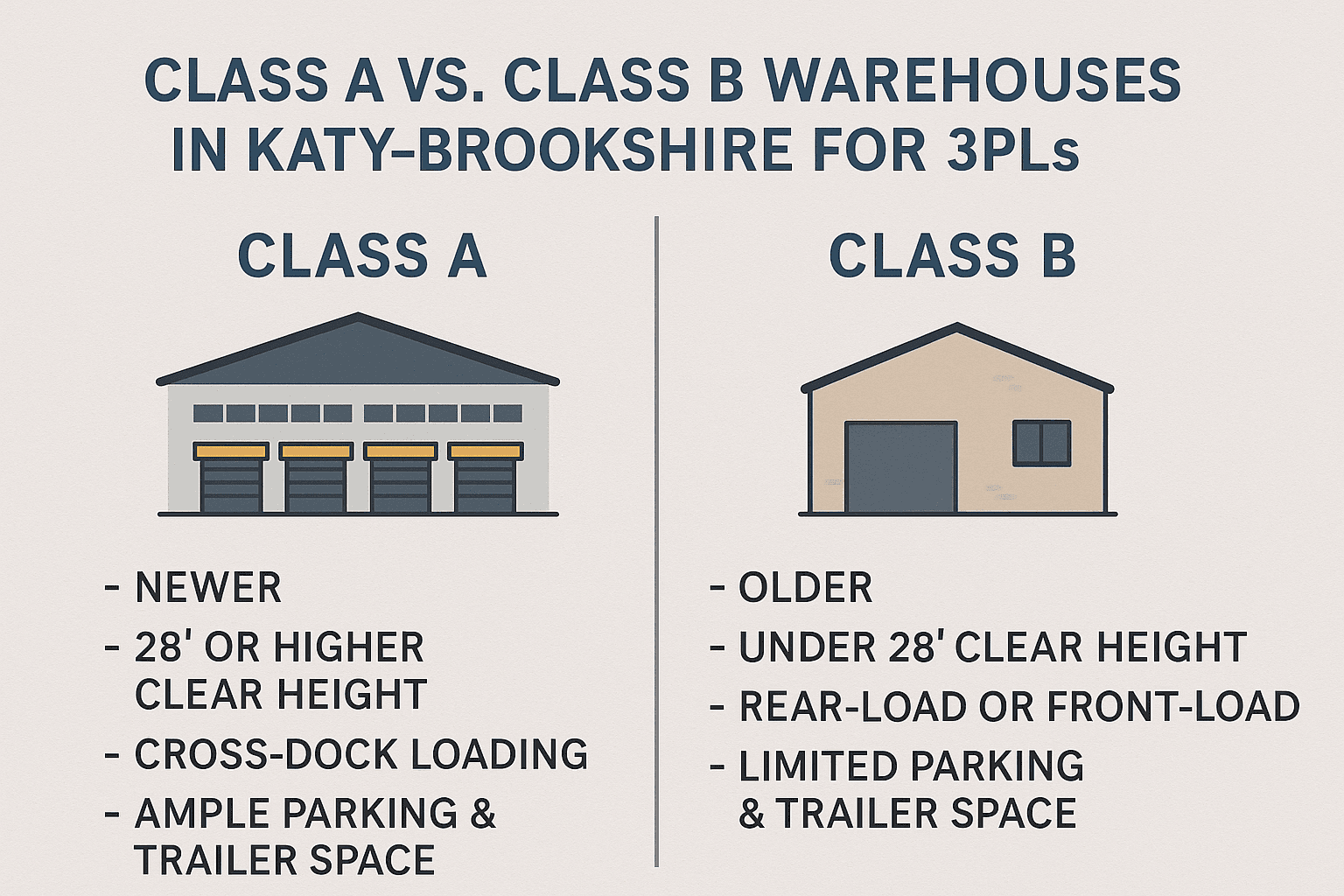
Class A vs Class B Warehouses in Katy-Brookshire: Which 3PL Property Type Delivers Better ROI?
Choosing between Class A and Class B warehouses in Katy-Brookshire? Learn which property type delivers the best ROI for 3PL operations along I-10.
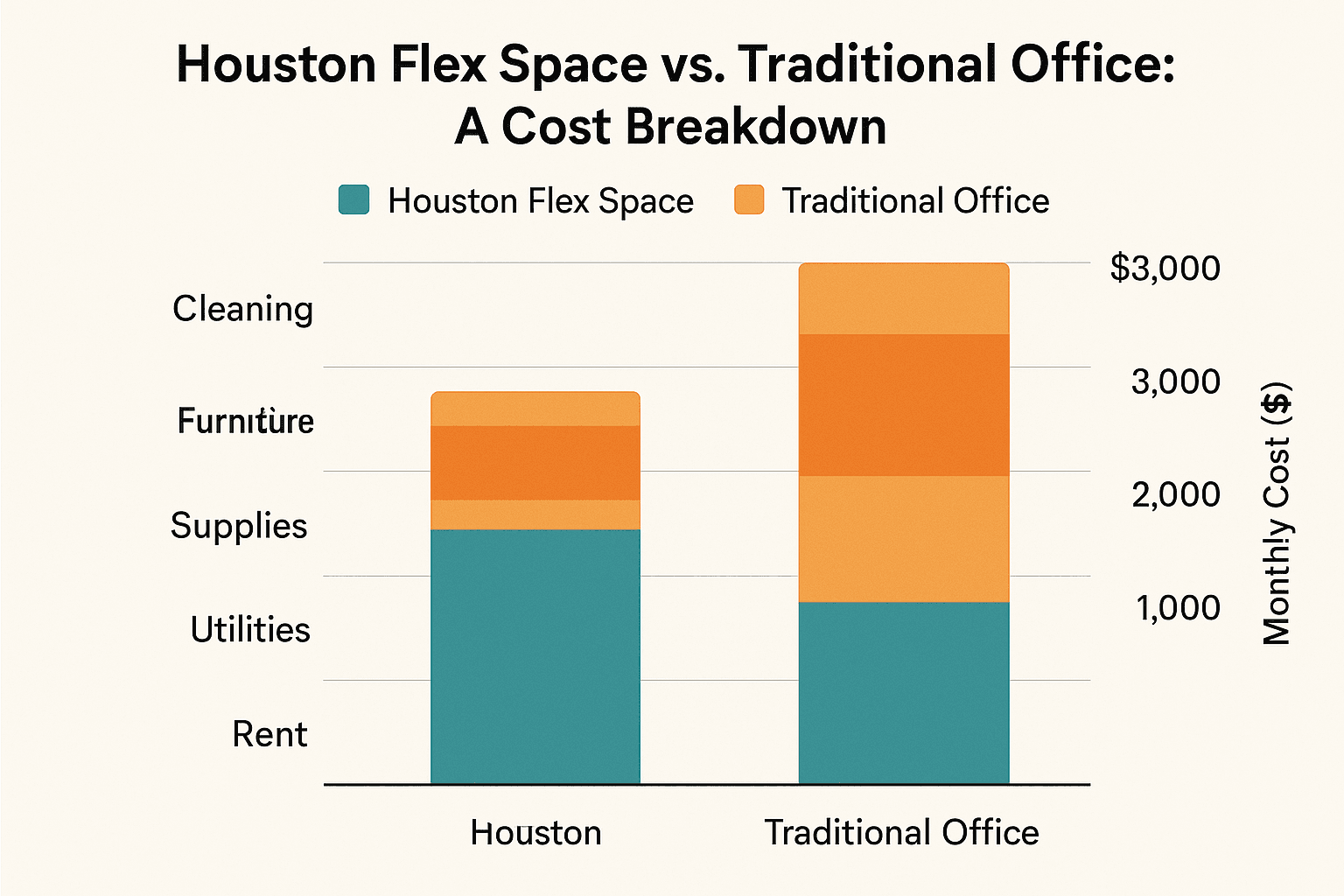
Houston Flex Space vs. Traditional Office: A Cost Breakdown for Small Businesses
Compare Houston flex space and traditional office costs for small businesses. Real pricing data, hidden fees, and market insights from a licensed CRE broker.

ESFR vs. Conventional Sprinklers in Houston Warehouses: Code & Insurance Impact
Houston warehouse owners face critical choices between ESFR and conventional sprinklers. Learn how each system affects insurance rates, building codes, and lease value.
How we can help
Talk to a licensed broker about your specific transaction — Houston + New Jersey.